
Carlos Courtney
Political Ads
Your Political Ad Account Will Get Banned in 2026 – Here’s the Exact Sequence That Triggers It
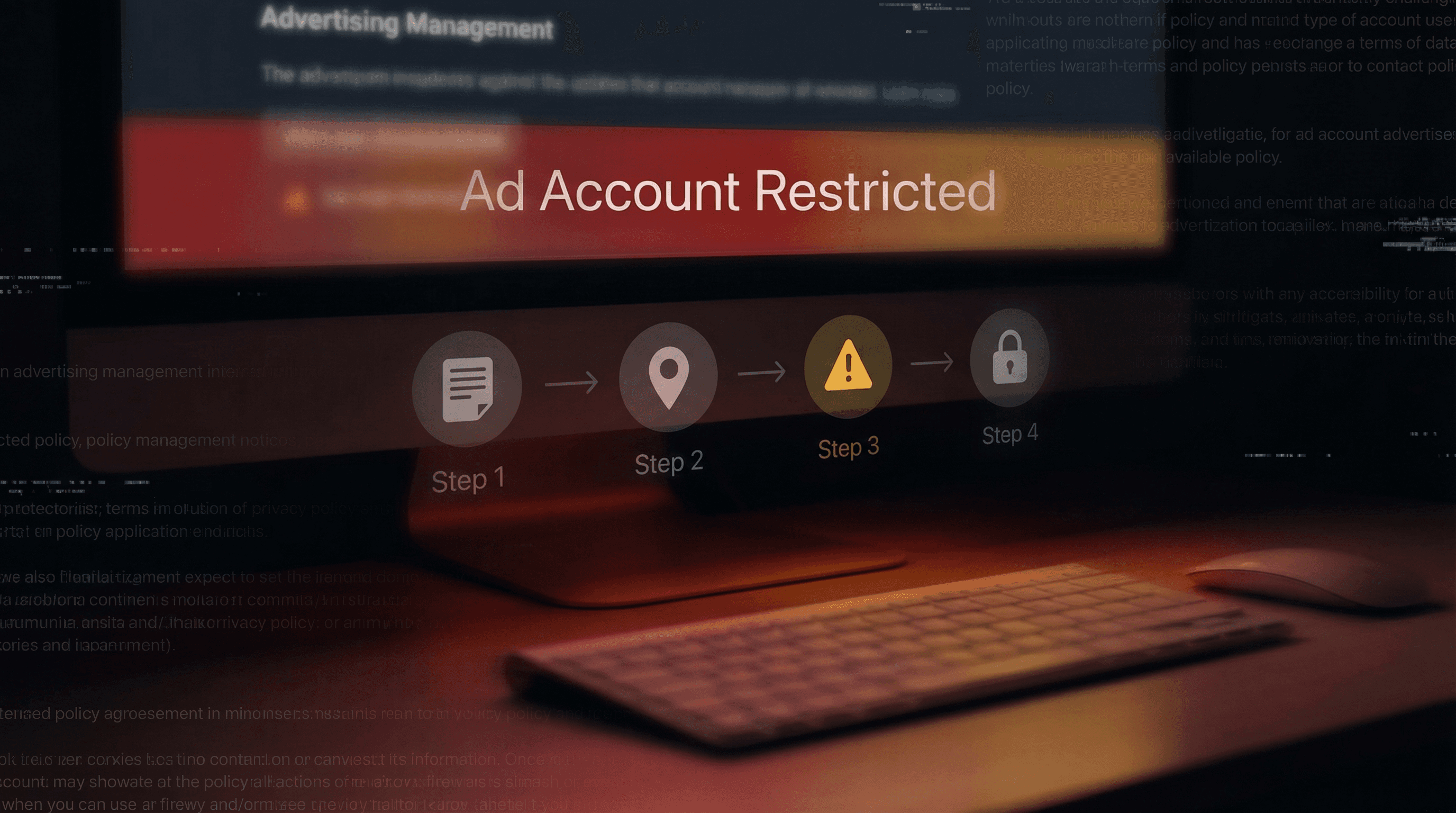
Political advertising is changing fast, and staying on the right side of platform rules is getting tougher. With new tech like AI and shifting platform policies, advertisers need to be sharp. This article breaks down how political ad accounts can get banned, what signs to watch for, and how to keep your campaigns running smoothly. We'll look at the exact political ad account ban sequence and what you can do to avoid it.
Key Takeaways
AI and synthetic identities are making disinformation campaigns more convincing, increasing the risk of account bans for those using them.
Bot activity and excessive microtargeting can trigger red flags on platforms, leading to scrutiny and potential suspension of political ad accounts.
Ad fatigue, where audiences see the same ads too often, causes performance drops and can signal to platforms that an account is becoming less effective or repetitive, contributing to the political ad account ban sequence.
The end of third-party cookies means targeting will change, requiring advertisers to adapt their strategies and potentially reducing the effectiveness of hyper-personalized campaigns.
Platforms like TikTok, X (formerly Twitter), and LinkedIn have unique rules and challenges; understanding these differences is key to avoiding account issues and maintaining campaign presence.
The Evolving Landscape of Political Advertising

Okay, so political advertising isn't what it used to be. It's gotten way more complicated, and honestly, a little wild. We're not just talking about TV spots anymore. The whole game has shifted, and if you're not paying attention, you're going to get left behind. The way campaigns reach voters is changing faster than ever.
AI's Role in Personalized Disinformation
Artificial intelligence is a big part of this shift. Think about how AI can take a message and tweak it just for you, based on what it knows about you. It's like having a tailor for your political ads, but instead of suits, they're tailoring messages to hit your specific buttons. This means disinformation can be super personalized, making it way more effective than just a generic flyer. It's a bit scary, really, because it can exploit what makes us tick. We're seeing AI used to create content that's designed to really grab your attention, sometimes by playing on your fears or biases. It's not just about getting you to click; it's about changing your mind, or even making you angry.
The effectiveness of these tailored messages means that bad actors can spread false narratives much more efficiently. It's a serious challenge for keeping our political conversations honest.
The Rise of Synthetic Identities and Bots
Then there are the fake accounts and automated bots. These aren't new, but they're getting a lot more sophisticated. They can create fake personas, spread messages across multiple platforms, and make it look like there's a lot more support for a certain idea than there actually is. It's hard to tell what's real and what's not when you've got an army of bots amplifying messages. This makes it tough for genuine voices to be heard. We're talking about accounts that look and act like real people, but they're just programmed to push a specific agenda. It really muddies the waters of public discourse.
Platform Shifts and Regulatory Pressures
On top of all this, the platforms themselves are changing. Some are cracking down on political ads, others are changing their rules, and governments are stepping in with new regulations. It's a constant game of catch-up. For example, the way people consume media has changed dramatically, with more folks watching content on streaming services and mobile devices. This means campaigns need to be where the voters are, which isn't always the traditional channels anymore. reaching voters now is key. Plus, with privacy concerns growing, platforms are having to rethink how they handle data, which affects how advertisers can target people. It’s a complex environment, and staying compliant is becoming a major headache for advertisers.
Understanding the Political Ad Account Ban Sequence
So, you're running political ads, and you're worried about getting your account flagged. It's not usually a single, sudden event. Think of it more like a series of escalating issues that platforms watch. They're trying to catch bad actors, but sometimes legitimate campaigns get caught in the crossfire. Let's break down how it typically unfolds.
Initial Triggers: Microtargeting and Bot Activity
It often starts subtly. Platforms are constantly scanning for unusual patterns. One big red flag is extreme microtargeting. When an ad campaign is so narrowly focused that it seems designed to exploit very specific psychological triggers for a tiny group, that can raise eyebrows. This is especially true if the content is divisive or emotionally charged.
Another early warning sign is the presence of bot activity associated with your campaign. This doesn't necessarily mean you're running the bots, but if your ads are being amplified by bot networks, or if engagement metrics look artificially inflated, the platform's algorithms will notice. It's a bit like a smoke detector – it goes off even if it's just burnt toast, but it's still an alarm.
Unusually narrow audience targeting: Focusing on hyper-specific, potentially vulnerable demographics.
Suspicious engagement spikes: Likes, shares, or comments that appear inorganic or come from newly created accounts.
Rapid spread of divisive content: Ads that quickly go viral within niche, often polarized, online communities.
Escalation: Deepfakes and Synthetic Identities
If the initial triggers aren't addressed, or if the campaign involves more sophisticated manipulation, things escalate. The use of deepfakes – AI-generated fake videos or audio – is a major trigger. Platforms are getting better at detecting these, and their use in political ads is a fast track to suspension. Similarly, the creation and use of synthetic identities, essentially fake personas used to spread messages or create a false sense of consensus, are heavily scrutinized.
The line between aggressive persuasion and outright manipulation is where platforms draw their bans. When AI is used to create believable but false content or to impersonate individuals or groups, it crosses a critical threshold. This isn't just about misleading people; it's about undermining the very fabric of trust in online information.
Platform Responses and Policy Interventions
Once these issues are detected and flagged, the platform's automated systems and human reviewers kick in. The response isn't always immediate, but there's a sequence. First, you might see reduced ad delivery – your ads just stop getting shown as much. Then, you might get warnings or requests for more information. If the violations are severe or persistent, the account suspension or ban is the final step.
Automated flagging: Algorithms identify policy violations.
Manual review: Human moderators assess the flagged content and activity.
Enforcement actions: Ranging from ad disapprovals to full account bans.
It's a tough game, and staying compliant means keeping a close eye on how your campaigns are performing and how they're being perceived, not just by humans, but by the algorithms too.
Key Indicators of Impending Account Suspension
So, you're running political ads, and things are going okay. But what if they're not? Platforms are getting smarter, and they're watching for certain patterns. If your account is on the verge of getting flagged, there are usually some signs. It's not always a sudden ban; often, it's a slow burn. Paying attention to these signals can help you avoid a nasty surprise.
Detecting Ad Fatigue and Performance Decline
Ever notice how an ad that worked wonders last week suddenly tanks? That's ad fatigue. When the same creative or message gets shown to the same audience too many times, people tune it out. On platforms, this shows up as a sharp drop in engagement rates – clicks, shares, comments, all that good stuff. Your cost per result also starts climbing because the platform has to work harder to get someone to pay attention.
Sudden drop in click-through rates (CTR).
Increased cost per acquisition (CPA) or cost per lead (CPL).
Lower engagement metrics (likes, shares, comments).
Reduced frequency of ad delivery to your target audience.
If you see these trends, it's a sign your ads are becoming stale. The algorithm might even start showing them less, thinking they're not relevant anymore. This isn't just about bad luck; it's a measurable signal that your campaign needs a refresh.
Monitoring Audience Sentiment and Feedback
Beyond the numbers, how are people actually reacting to your ads? Platforms often have ways to see comments or feedback directly on ads or related posts. If you're seeing a lot of negative comments, confusion, or people calling out your ads as misleading, that's a big red flag. This kind of public outcry can get noticed by platform moderators pretty quickly. It's not just about whether people click; it's about whether they feel tricked or annoyed.
Pay close attention to the qualitative feedback. Sometimes a few angry comments can snowball into a bigger problem if the platform's AI or human reviewers start seeing a pattern of user dissatisfaction. It's like a digital town square – if everyone's complaining, someone eventually listens.
Recognizing Algorithmic Suppression Signals
Sometimes, platforms don't outright ban you, but they start making it harder for your ads to be seen. This is called algorithmic suppression. Your ads might still be running, but they're shown to fewer people, or only to audiences that are less likely to convert. You might notice:
Your ad delivery slows down significantly even though your budget hasn't changed.
Your reach and impressions drop unexpectedly.
Your ads start appearing in less relevant placements or to audiences outside your defined targeting.
Your campaign performance metrics plateau or decline without a clear reason like ad fatigue.
This is often a precursor to a more serious action. The platform is essentially telling you, "We're not comfortable with this," without explicitly saying why. It's a subtle way of pushing problematic content out of the spotlight. This gradual reduction in visibility is a strong indicator that your account is under scrutiny.
The Impact of Third-Party Cookie Deprecation
Okay, so let's talk about third-party cookies. You know, those little bits of data that websites use to track you across the internet? Well, they're on their way out, and it's a pretty big deal for political advertisers. Google's been talking about this for a while, and while there have been some delays, the shift is happening. This means the way we target and measure ads is going to change, whether we like it or not.
Hampering User Tracking and Targeting
Think about how you usually run your ads. You probably rely on those cookies to figure out who's interested in what, right? You might retarget people who visited a specific page or try to find new audiences that look like your existing supporters. Without third-party cookies, that kind of detailed tracking becomes way harder. It's like trying to navigate a city without a map – you can still get around, but it's going to take longer and you might miss some turns.
Behavioral Targeting: Pinpointing users based on their online activities becomes less precise.
Retargeting: Reaching people who previously interacted with your campaign or website gets more difficult, especially across different devices.
Audience Extension: Finding new audiences that share characteristics with your existing supporters relies heavily on cookie data, which will be less available.
Reduced Personalization and Lookalike Audiences
Personalization is key in political campaigns. You want to show the right message to the right person at the right time. Third-party cookies helped build detailed user profiles, which in turn allowed for highly personalized ad experiences and the creation of lookalike audiences. When those cookies disappear, those detailed profiles get a lot thinner. This means ads might feel less relevant, and building new audiences that mirror your best supporters will be a bigger challenge. It's going to require a different approach to audience building, perhaps focusing more on first-party data that you collect directly.
The move away from third-party cookies isn't just a technical shift; it's a fundamental change in how digital advertising operates. Advertisers will need to adapt by focusing on direct relationships with their audience and utilizing data they own.
Implications for Campaign Performance Metrics
So, what does all this mean for your campaign's performance? Well, expect some shifts. Metrics that relied heavily on third-party cookie data, like precise attribution or frequency capping (making sure the same person doesn't see your ad too many times), will become less reliable. You might see changes in how you measure conversions and overall campaign effectiveness. It's not necessarily the end of the world, but it does mean you'll need to look at different ways to track success. Tools that use probabilistic modeling or focus on first-party data will become more important. It's a good time to start exploring these alternatives now, before the changes fully take hold.
Navigating Platform-Specific Challenges

Look, every ad platform out there has its own quirks and rules, and trying to run political ads across them can feel like juggling chainsaws. What works on one might bomb on another, or worse, get your account flagged.
The TikTok Ban and Its Ramifications
Remember when TikTok was the hot new thing for reaching younger voters? Well, that's pretty much over for political advertisers in many regions. The outright bans and restrictions mean campaigns have to find new places to connect with those demographics. It's a big shift, forcing a rethink of where to put ad dollars and how to craft messages for different environments. This forces a strategic pivot, moving resources to platforms that are still open to political messaging.
Twitter's Transformation Under New Ownership
Twitter, now X, has been a wild ride. Since the takeover, policies have changed faster than a speeding bullet. What was once a go-to for real-time political discourse and rapid response ads is now a much more uncertain space. Advertisers need to be super careful about what they post and how they target. The platform's own approach to political content is still a bit of a moving target, making it tough to plan long-term.
LinkedIn's Growing Influence in Advertising
LinkedIn used to be just for job seekers and B2B folks, right? Not anymore. It's becoming a surprisingly effective place for political campaigns, especially for reaching specific professional groups or older, more affluent demographics. The targeting options are pretty granular, allowing campaigns to zero in on people based on their industry, job title, or seniority. It’s a different vibe than other platforms, more professional, so the ad creative needs to match.
Professional Targeting: Reach specific industries or job roles.
Demographic Focus: Ideal for older, more established audiences.
Content Sensitivity: Ads generally need a more polished, less inflammatory tone.
Trying to keep up with platform changes feels like a full-time job in itself. You spend weeks perfecting a campaign, only for a policy update to come out that throws everything off. It's exhausting, but staying informed is the only way to avoid getting blindsided.
Preventative Measures for Political Advertisers
Look, nobody wants their ad account to get flagged, right? It’s a headache, and frankly, it can tank a whole campaign. The good news is, you can do a lot to keep things running smoothly. It’s all about staying ahead of the curve and not relying on old tricks that just don't work anymore.
Maintaining Creative Freshness and Variety
Think about it: if you see the same ad over and over, you tune it out. Your audience is no different. Stale creative is a fast track to ad fatigue, where people just stop paying attention, and your performance tanks. We need to keep things interesting.
Rotate your ad visuals and copy regularly. Don't let the same set of images or messages run for weeks on end. Mix it up!
Experiment with different ad formats. Try videos, carousels, or even simple text ads. Different formats grab attention in different ways.
Use dynamic creative tools. These can automatically test different combinations of headlines, images, and calls to action to see what works best for different people.
Diversifying Targeting Strategies
Relying too heavily on one way to reach people is risky. Platforms are changing, and what worked yesterday might not work tomorrow. Plus, overly narrow targeting can sometimes look like you're trying to hide something, which can raise red flags.
Move beyond hyper-specific microtargeting. While it can be effective, it's also a prime area for scrutiny. Broaden your reach a bit.
Explore contextual targeting. This means placing ads on websites or next to content that's relevant to your message, without needing to track individual users. It's a privacy-friendly approach that's gaining traction. Platforms built with AI can make this much smarter than just keyword matching.
Build your first-party data. Collect emails or phone numbers directly from people who engage with your content. This data is yours and isn't affected by platform changes. You can use it for remarketing or to build lookalike audiences.
Proactive Monitoring and Adaptation
You can't just set and forget your ads. You need to watch what's happening and be ready to change things up. This means keeping an eye on performance metrics and what people are saying.
Watch your ad frequency. If people are seeing your ads too many times, they'll get annoyed. Most platforms let you set limits on how often someone sees an ad.
Monitor audience sentiment. Are people reacting positively or negatively to your ads? Look at comments and engagement patterns. Negative feedback can be an early warning sign.
Stay informed about platform policy changes. Platforms like Meta are constantly updating their rules, especially around sensitive topics like political advertising. Keeping up with these changes, like the new rules impacting political advertising in the EU, is key to avoiding trouble.
The digital ad space is always shifting. What's considered standard practice today might be a violation tomorrow. Being proactive with your creative, your targeting, and your monitoring isn't just good strategy; it's becoming a necessity for survival. Don't wait for a ban to happen; build your defenses now.
Here’s a quick look at how to manage ad exposure:
Strategy | Description |
|---|---|
Frequency Capping | Limit ad views per user (e.g., 3-5 times/week). |
Creative Rotation | Pause or swap ads when they've been seen too much. |
Audience Segmentation | Tailor ads to smaller groups and exclude overexposed users. |
Dynamic Creative | Let tools automatically adjust ad elements for better performance. |
A/B Testing | Continuously test and retire underperforming ad variations. |
Channel Diversification | Spread ads across different platforms to avoid oversaturation. |
So, What's the Takeaway for 2026?
Look, the digital ad world is changing fast, and frankly, it's getting complicated. By 2026, the way political ads work is going to be way different. We're seeing AI get smarter, bots becoming more common, and platforms constantly shifting rules. Plus, things like third-party cookies disappearing and ad fatigue mean old tricks won't cut it anymore. It’s not just about getting your message out; it’s about doing it smartly and ethically. If you’re running political ads, you need to pay attention to these trends now. Start thinking about new ways to connect with voters, be transparent, and avoid those tactics that could get your account flagged. Ignoring this stuff means you'll likely be left behind, or worse, banned.
Frequently Asked Questions
Why are political ad accounts getting banned?
Political ad accounts might get banned because they use tricky tactics that break the rules. This includes using fake accounts or 'bots' to spread messages, creating fake videos or images (like deepfakes), or targeting people in ways that aren't allowed. Platforms are trying to keep their sites safe and fair, so they ban accounts that don't follow the rules.
What is 'microtargeting' and why is it a problem?
Microtargeting is when advertisers use a lot of information about people to send them very specific ads. While it can be useful for regular ads, it can be a problem in politics because it can be used to send different, sometimes misleading, messages to different groups of people. This can make it hard for everyone to get the same information and can be used to manipulate voters.
How do bots affect political ads?
Bots are like fake online accounts that can post messages or spread ads very quickly. In politics, they can make it seem like more people support a certain idea or candidate than actually do. They can also be used to spread false information or confuse voters about how or when to vote, making it harder for real people's voices to be heard.
What is 'ad fatigue' and how does it relate to account bans?
Ad fatigue happens when people see the same ad too many times, and they start to ignore it or get annoyed. This makes the ads less effective. While ad fatigue itself doesn't directly cause a ban, if advertisers keep showing the same old ads over and over, it can lead to poor performance. Platforms might see this as a sign of bad practices or a lack of effort, which could contribute to an account being reviewed or banned.
What are 'synthetic identities' and why are they risky?
Synthetic identities are fake online personas created using a mix of real and fake information. In politics, these can be used to create fake accounts or spread messages that seem real but aren't. They are risky because they can be used to manipulate public opinion, spread misinformation, and make it hard to know who is actually behind a political message.
How can political advertisers avoid getting their accounts banned?
To avoid bans, political advertisers should stick to the rules of each ad platform. This means being honest about who they are, not using fake accounts or bots, avoiding misleading content like deepfakes, and not using overly aggressive targeting. It's also important to keep ads fresh and interesting, and to pay attention to what people are saying about their ads to make sure they aren't causing problems.