Carlos Courtney
Political Ads
The 2026 Political Ad Platform Tier List (Who Actually Delivers Votes vs Who Just Looks Sexy)
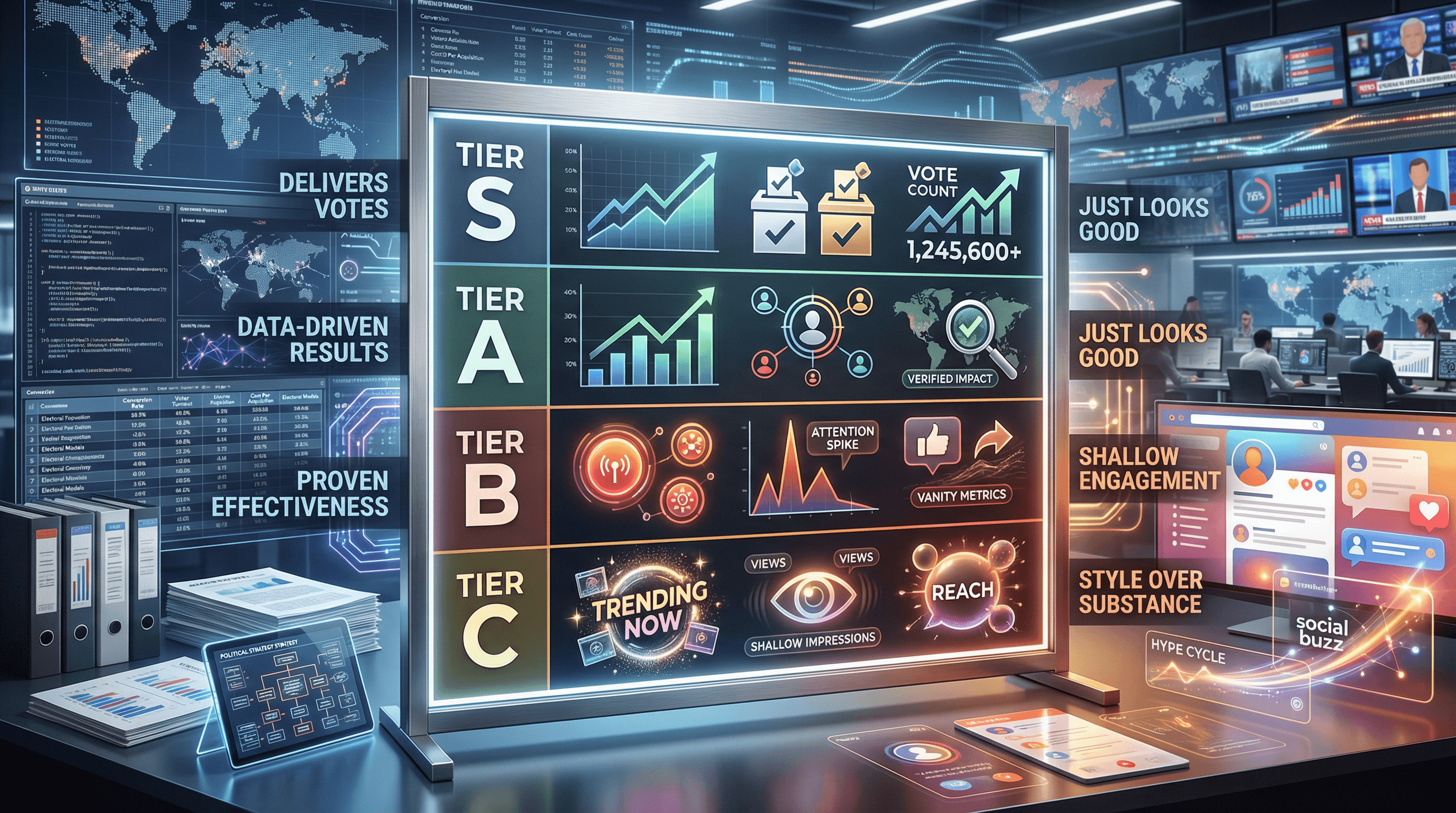
Alright, let's talk about the 2026 political ad platform tier list. It's not just about which platforms look good on paper; it's about who can actually get the job done and bring in the votes. We're seeing a big shift in how campaigns reach people, and some old-school methods just aren't cutting it anymore. This year, we're breaking down what's working, what's not, and where your ad dollars should really be going. Get ready, because the landscape is changing fast.
Key Takeaways
Connected TV (CTV) is becoming the go-to for reaching cord-cutters, with local ad spending expected to jump significantly. Platforms can now target down to the zip code, making ads more effective.
Generative AI is changing the game for ad creation. Campaigns can now quickly make custom ads for different markets, making it easier to test out lots of different messages.
Hyperlocal targeting is a big deal for political campaigns. With more people watching TV through streaming, reaching specific local audiences is more important than ever.
Micro-targeting, powered by AI, allows campaigns to tailor messages to very specific groups of voters based on their preferences and biases.
While AI-generated creative is powerful, campaigns need to be aware of potential misinformation and the need for more varied ad content to appeal to different demographics.
Connected TV

Okay, so Connected TV, or CTV as everyone calls it, is really shaking things up in the political ad world. It's not just about looking pretty anymore; it's about actually getting the job done. CTV is becoming the go-to place for advertisers, especially those who want to reach people who've ditched their cable subscriptions. Think about it, more and more folks are cutting the cord, and they're not just watching Netflix. They're watching news, sports, and everything else on streaming platforms. This means campaigns have to be where the voters are, and right now, that's on CTV.
What's really interesting is how CTV is opening doors for smaller players. Local businesses and even political campaigns that might not have had huge budgets before can now get their message out. They can target specific neighborhoods, even down to the zip code, which is pretty wild. This hyperlocal targeting is a game-changer because it means ads can be super relevant to the people seeing them. No more wasting money showing ads to folks who will never vote for you.
Here’s a quick look at why CTV is gaining ground:
Cord-Cutting Trend: More households are ditching traditional cable for streaming services.
Targeting Capabilities: Advanced tools allow for precise audience segmentation, reaching specific demographics and locations.
Cost-Effectiveness: For certain campaign goals, CTV can offer a better return on investment compared to older media.
Measurable Results: Advertisers can get better data on who saw their ads and how effective they were.
We're seeing a big shift, with local ad dollars already pouring into CTV, and that's only expected to grow. Plus, with new tools making it easier to create ads, even for specific markets, it's becoming a really powerful tool for getting out the vote. It feels like CTV is the one area of TV advertising that's actually going to grow in the next few years, especially with elections coming up.
The days of just blasting a generic ad everywhere are fading fast. Now, it's all about smart targeting and making sure your message hits home with the right people, right when they're watching their favorite shows or catching up on the news. CTV makes that possible in a way that just wasn't feasible before.
Generative AI
Okay, so generative AI. It's the new kid on the block, and honestly, it's making some serious waves in the political ad world. We're talking about tools that can whip up images, text, and even video from simple prompts. The RNC, for example, recently dropped an ad that was entirely made with AI, painting a pretty grim picture of what might happen if a certain candidate wins. It looked… well, a bit surreal, which actually worked for their message of a dark future.
But it's not just about creating spooky visuals. Think about campaign emails. Some campaigns are already using AI to help write them, and get this – sometimes the AI comes up with better lines than the human writers. It’s like having a super-fast brainstorming partner who’s read everything.
Here’s a quick rundown of how campaigns might be using this tech:
Content Creation: Generating ad copy, social media posts, and even basic video scripts.
Audience Analysis: Processing vast amounts of data to understand voter sentiment and tailor messages.
Message Testing: Simulating focus groups to see how different slogans or talking points might land.
The big worry, of course, is misinformation. AI can create incredibly convincing fake images and audio – think 'deepfakes'. If these get out there before they can be debunked, they could really mess with an election. It’s a whole new level of challenge compared to the 'cheapfakes' we saw in 2020, which were just basic edits.
Right now, AI is still a bit clunky with things like hands and text, but it’s improving fast. Campaigns are definitely paying attention, trying to figure out how to use it for their benefit while also worrying about what the other side might do with it. It’s a wild west situation, and we’re only just starting to see what’s possible.
Hyperlocal Targeting
Forget casting a wide net; the real action in 2026 is getting super specific. Hyperlocal targeting means we're talking ads that hit home, like, really hit home. Think about it: instead of a generic message for an entire state, you're reaching voters in a specific neighborhood, maybe even down to the street.
This isn't just a new trick for political campaigns. Local businesses have been doing this for ages, tailoring offers to their immediate area. Now, with the way people watch TV shifting, especially with more folks cutting the cord, platforms can actually do this on a massive scale. It's about reaching people where they are, when they're most likely to pay attention.
Here's why it matters:
Precision: You can pinpoint audiences based on zip codes, neighborhoods, or even specific demographics within a small area.
Efficiency: Less wasted ad spend means your message reaches the people who actually matter for that specific race or issue.
Relevance: Ads can be tailored to local concerns, making them feel more personal and impactful.
Measurability: It's easier to track if your hyper-targeted ads are actually working and reaching the right eyes.
The shift towards hyperlocal means campaigns can finally speak directly to the unique needs and concerns of individual communities, moving beyond broad strokes to address specific local issues. This level of detail used to be a pipe dream, but technology is making it a reality.
We're seeing local ad dollars already pouring into connected TV, and that's only going to grow. It's a smart move because more and more potential voters are ditching cable and relying solely on streaming. So, if you want to connect with them, you've got to be where they're watching, with messages that speak to their specific corner of the world.
Micro-Targeting
Okay, so let's talk micro-targeting. This is where things get really interesting, and honestly, a little bit intense. Forget broad strokes; we're talking about laser-focused messaging. Think of it like this: instead of shouting to a whole stadium, you're having a one-on-one chat with each person in the crowd. Campaigns are getting seriously good at figuring out exactly who to talk to, and more importantly, what to say to get them to pay attention.
The whole point is to make ads so specific that they feel like they were made just for you. This isn't just about age and location anymore. We're talking about interests, past behaviors, online habits – you name it. AI is a huge part of this, helping sort through mountains of data to find those tiny groups of voters who might be on the fence or just need that extra nudge.
Here's a quick rundown of what that looks like:
Data Collection: Gathering info from all sorts of places – voter files, online activity, past campaign interactions.
Audience Segmentation: Using that data to carve out super-specific voter groups, like "first-time homeowners in suburban areas who care about school funding."
Tailored Messaging: Crafting ads and messages that speak directly to the concerns and interests of each tiny segment.
Platform Delivery: Using digital platforms, especially Connected TV (CTV), to get those specific messages in front of the right eyes.
It's a game of inches, really. You're not trying to win over everyone; you're trying to win over the right people with the right message at the right time. It’s a lot more complex than it sounds, and frankly, it’s where a lot of the real political advertising action is happening.
The effectiveness of micro-targeting hinges on the ability to not just identify niche audiences, but to craft messages that genuinely connect with their specific concerns, making them feel seen and understood by the campaign. It's about relevance, not just reach.
AI-Generated Creative
Okay, let's talk about AI-generated creative in political ads. It's a wild west out there right now, and honestly, it's kind of fascinating and terrifying all at once. We're seeing campaigns start to play with tools that can whip up images and even video clips. The RNC, for example, put out an ad that was entirely made with AI, painting a pretty grim picture of what might happen if President Biden wins again. Some of it looked pretty real, but there was this weird, almost dreamlike quality to other parts. They used it to suggest a possible future, not necessarily a factual one.
The big question is whether this stuff actually moves voters or just looks cool. Right now, AI is really good at creating these dramatic, dystopian scenes. It's less convincing when it tries to make something look completely normal and believable. We've all seen those AI-generated hands that look a little… off, right? Or text that's just gibberish. Those are the tell-tale signs, though they're getting better fast.
Here's a quick rundown of what campaigns are doing (or thinking about doing) with AI creative:
Visuals: Creating images and short videos for ads. Think dramatic backdrops, symbolic imagery, or even hypothetical scenarios. The RNC ad is a prime example.
Messaging Drafts: Using AI to help write ad copy or email subject lines. Some campaigns have found AI can come up with surprisingly effective phrasing.
Political Campaigns
Political campaigns are really starting to lean into new tech, and it's not just about looking modern. We're seeing a big shift, especially with how they're reaching voters. Forget just TV ads; campaigns are now all over streaming services and digital platforms. It's all about meeting people where they are, and these days, that's often not in front of a traditional cable box.
One of the most interesting developments is how AI is being used. It's not just for making spooky deepfakes, though that's definitely a concern. Campaigns are actually using AI tools to help write emails and even test out different messages. Think of it like having a super-fast brainstorming partner that can churn out ideas and see what might work best with specific groups of voters. The Democratic Party, for instance, has been experimenting with AI for fundraising emails, and sometimes, the AI's suggestions actually perform better than what human writers came up with. It's a wild thought, right?
Here's a quick look at some ways campaigns are using tech:
AI-powered copywriting: Helping draft emails, speeches, and ad scripts.
Hyperlocal targeting: Reaching voters in very specific geographic areas, which is huge for local races.
AI-driven polling: Simulating focus groups to test messages before they're even shown to real people.
Generative AI creative: Producing ad visuals and videos, sometimes to paint a picture of a potential future.
The ability to create custom ads for small, specific groups of people is becoming more sophisticated. AI can analyze a lot of data quickly, potentially tailoring messages to individual viewers based on what they already believe. This level of personalization is a game-changer for how campaigns communicate.
It's also worth noting that the rise of streaming means local ads, which used to be a big deal on regular TV, are finding a new home. Platforms can now target down to the zip code, making sure ads are seen by the right people. This is a big deal for candidates trying to connect with voters in their own backyards. We're seeing local ad spending jump onto these platforms, and it's expected to keep growing. It's a whole new ballgame for political advertising, and campaigns that figure it out first are likely to have an edge. The political battleground has definitely shifted, and adapting to these new channels is key to reaching voters today.
Streaming Services
Remember when streaming was all about escaping ads? Yeah, those days are pretty much over. Now, most people are cool with watching ads if it means cheaper or free content. It’s wild how much things have changed. Nielsen says almost 80% of TV time spent on streaming platforms is now supported by ads. That’s a huge number, and it’s only going up.
Think about it: YouTube is basically all ads. Amazon Prime Video switched everyone over. Even the big names like Hulu and Peacock have ad-supported options that tons of people are using. It’s not just about saving money anymore; it’s about the content being available. Plus, even if you try to stick to ad-free, you’ll still catch ads during live sports or news broadcasts.
This shift means a lot for political campaigns. They can now reach audiences directly on platforms where people are actually spending their time. It’s not just about broad strokes anymore; it’s about getting your message in front of the right eyes, at the right time, on the screen they’re glued to.
Here’s a quick look at the trend:
Ad-supported streaming hours are at an all-time high.
Most major streaming services now offer an ad-supported tier.
Free ad-supported streaming apps (FAST) are growing fast.
The key takeaway here is that the streaming landscape has fundamentally changed. It’s no longer a niche escape but a mainstream advertising channel. Campaigns that ignore this shift will be missing out on a massive opportunity to connect with voters.
Digital Deep Dive
Okay, let's talk about what's really going on under the hood with digital advertising. It's not just about pretty pictures anymore; it's about smarts. The real magic happens when data and technology work together to find the right eyeballs. Think about how long it takes to just pick something to watch on streaming services. We're talking 20 minutes sometimes, which is just wild. People end up rewatching old favorites because they can't find anything new. That's where AI is stepping in, quietly making things better.
It's not always the flashy stuff you see. A lot of it is AI working behind the scenes to make sure ads actually make sense to the person seeing them. This means fewer ads that just feel out of place and more ads that actually connect. Last year, a bunch of people said they paid more attention to ads that felt relevant to them. It's a win-win: viewers see stuff they might actually like, and brands get their message in front of people who are more likely to care.
Here's a quick look at how this is shaking out:
Better Recommendations: Platforms are getting way better at suggesting content, which keeps people engaged longer.
Smarter Ad Placement: AI helps put ads in front of the right audiences, reducing annoyance and increasing effectiveness.
Personalized Experiences: From content rows to ad targeting, everything is becoming more tailored.
This shift is especially important for political campaigns looking to reach voters across different screens. It's about making every impression count.
The goal is to make the whole experience feel smoother, both for finding shows and for seeing ads. It's about cutting down on wasted time and making sure everyone gets what they're looking for, faster.
Free ad-supported services have a big chance here too. By using AI with their own data, they can build loyalty and get people coming back. It's all about making the digital ad world work better for everyone involved.
Ad Spend Stats
When we talk about political ad spending, it's easy to get lost in the big numbers. But where is all that money actually going, and what's the return? It's not just about how much is spent, but how effectively it's used. We're seeing some interesting shifts happening.
For instance, back in 2021, a significant amount, around $1.3 billion, was spent on Over-The-Top (OTT) ads across various streaming services. That's a lot of eyeballs on platforms like Hulu, HBO Max, and Peacock. However, recent trends suggest a bit of a slowdown in OTT ad spending. It makes you wonder if the initial hype has cooled off or if advertisers are just reallocating funds.
Here's a quick look at where some of that ad money has been moving:
Connected TV (CTV): This is where a lot of the action is. Many advertisers are planning to increase their spending here.
Social Media: Some of this spending is being pulled from social platforms.
Paid Search: Similarly, a portion of the budget is shifting away from paid search campaigns.
The big takeaway? A good chunk of advertisers are looking to move their dollars from social and search into CTV. We're hearing figures suggesting that around 36% of those increasing CTV spend are pulling from social, and 32% are shifting from paid search. It seems like the perceived safety and measurability of CTV are becoming more attractive, especially as other digital spaces get a bit noisy.
With the rise of AI-generated content flooding other channels, there's a growing desire for more reliable and high-quality ad environments. This could mean even more money flowing into platforms that offer a more controlled and measurable experience for political campaigns.
Fundraising Emails
When it comes to getting people to open their wallets for a political cause, email is still king. It might not be the flashiest tool in the digital toolbox, but it's incredibly effective. Think about it: your inbox is probably flooded every day, right? So, for a campaign email to actually get read, it needs to be good. The subject line is everything; it's the gatekeeper. If it doesn't grab attention, the rest of your message doesn't even stand a chance.
Campaigns use emails for a few key reasons:
Direct Communication: It's a way to talk directly to supporters without a middleman.
Fundraising: Obviously, asking for donations is a primary goal.
Mobilization: Getting people to volunteer, attend events, or vote.
Information Sharing: Keeping supporters updated on campaign progress and news.
Crafting these emails is an art. You need to balance urgency with a personal touch. A/B testing different subject lines and calls to action is standard practice. You'll see a lot of segmentation too – sending slightly different messages to different groups of people based on their past behavior or stated interests. It's all about making the ask feel relevant to the individual.
The sheer volume of emails sent daily means that personalization and a clear, compelling message are no longer optional. They're the baseline for cutting through the noise and actually getting someone to click that donate button or take another desired action. It's a constant battle for attention in a crowded digital space.
While the open rates might seem low compared to other platforms, the conversion rate for those who do open and click through can be surprisingly high. It’s a numbers game, but also a relationship game. Building that connection over time through consistent, well-written emails is what keeps the donations coming in.
So, What's the Takeaway?
Alright, so we've looked at a bunch of different ways campaigns are trying to get their message out there for 2026. It's clear that things are changing fast. While some platforms might look slick and modern, the real win seems to be in reaching people where they actually are, especially with more folks cutting the cord and watching stuff online. AI is definitely shaking things up, making it easier to create ads and maybe even figure out who to show them to. But, and this is a big but, it's not magic. The old-school methods of knowing your audience and making ads that connect still matter. The platforms that can prove they actually get voters to the polls, not just get clicks, are the ones that will really matter. It’s less about looking pretty and more about getting the job done.
Frequently Asked Questions
What is Connected TV (CTV) and why is it important for political ads?
Connected TV, or CTV, is basically TV watched through the internet, like on smart TVs or streaming devices. It's becoming super important for political ads because more and more people are cutting the cord from traditional cable. This means campaigns can reach voters directly on platforms like Roku, Hulu, and others, even down to specific neighborhoods.
How is Generative AI changing political advertising?
Generative AI can create ads super fast, even making different versions for different places or groups of people. For example, an ad might be made to appeal specifically to voters in one city versus another. It also helps make ads that look really realistic, though sometimes a bit strange, which can be used to show a candidate's vision or a potential future.
What does 'hyperlocal targeting' mean in political ads?
Hyperlocal targeting means showing ads to people in very specific, small areas, like a single zip code or even a neighborhood. Instead of broad ads, campaigns can use this to focus on the issues that matter most to voters in that exact spot, making the message more relevant and hopefully more effective.
Can AI create fake political ads that could fool voters?
Yes, AI can create very convincing fake images, audio, and videos, often called 'deepfakes.' While these can be used to show imagined futures, there's a worry they could be used to spread false information about candidates. However, people are also getting better at spotting these fakes, and sometimes simpler 'cheapfakes' can be just as effective at fooling people.
How are political campaigns using AI for things like emails and polling?
Campaigns are using AI to help write things like fundraising emails, sometimes finding messages that work better than what humans wrote. AI can also be used to test out different campaign ideas or slogans by pretending to be voters in 'AI focus groups,' helping them figure out the best way to talk to people before they even go out to ask for votes.
Why might political ad spending on CTV increase in the future?
As more people ditch cable TV for streaming, CTV becomes a more effective place to reach voters. Plus, streaming platforms offer tools to target ads very precisely, making sure the message gets to the right eyes. With more voters only watching TV through the internet, campaigns will likely spend more money there to get their message out.