
Carlos Courtney
Political Ads
Political Ad Frequency Caps: What Actually Works Without Annoying Voters
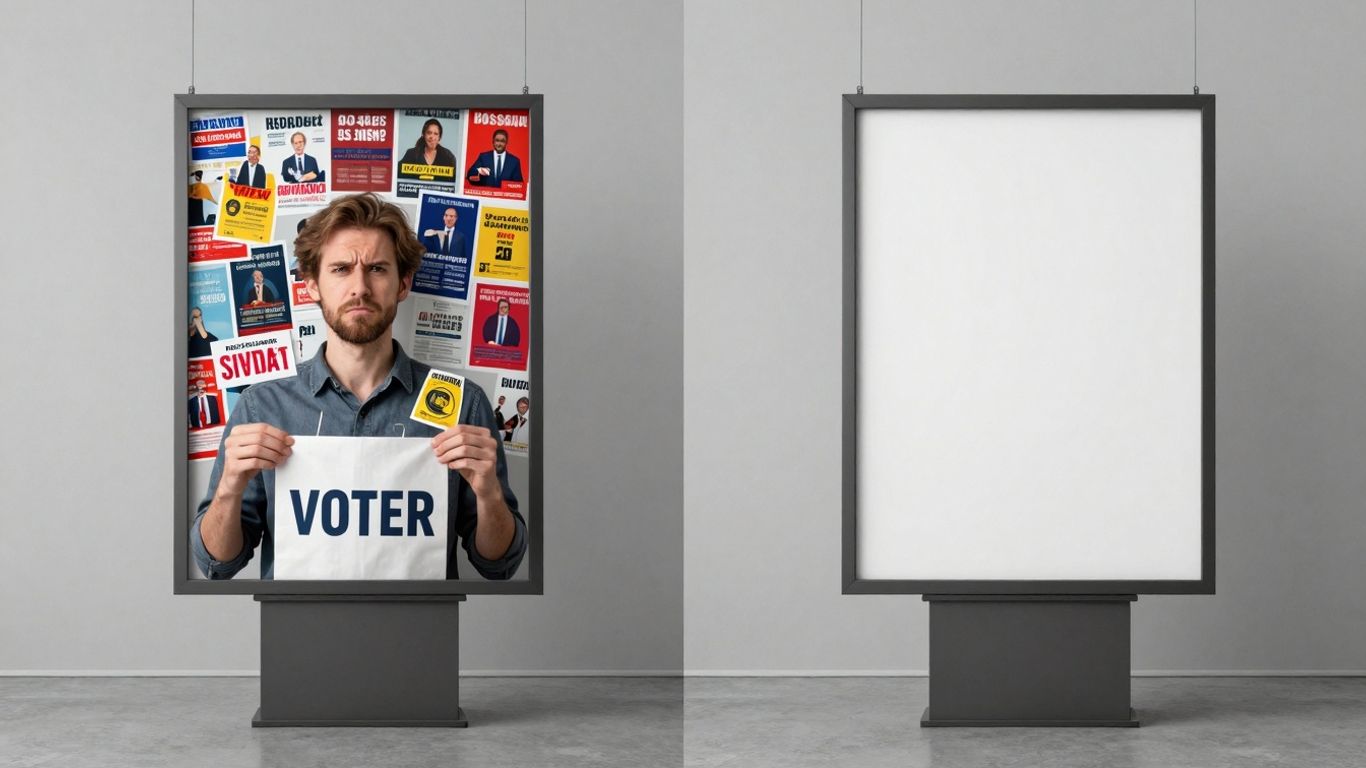
Political campaigns are always looking for ways to get their message out without driving voters crazy. Seeing the same ad over and over just isn't effective, and frankly, it's annoying. This article looks at how to use political ad frequency cap strategies to reach voters effectively, especially in crowded digital spaces. We'll cover what works, what doesn't, and how to make your advertising dollars count without just adding to the noise.
Key Takeaways
Over-saturation of ads, especially on cable, leads to annoyance and low recall, making a political ad frequency cap essential.
Digital channels like Connected TV and podcasts offer new ways to reach voters, particularly younger demographics, but often see underinvestment from campaigns.
Advanced targeting, using tools like granular geotargeting and durable IDs, allows for more precise voter outreach and better measurement of ad impact.
Smart OTT buying involves prioritizing quality ad space, setting strict political ad frequency cap limits to avoid annoying viewers, and demanding clear attribution for campaign success.
Integrating voter files with ad platforms enables hyper-local targeting and sequential storytelling, creating more persuasive and efficient ad campaigns.
Understanding Political Ad Frequency Cap Challenges
It feels like everywhere you look these days, there's a political ad. On TV, online, even on your phone. While getting the message out is important, there's a real danger of just annoying people so much they stop paying attention altogether. This constant barrage is a major hurdle for any campaign trying to connect with voters.
The Annoyance Factor of Ad Saturation
Think about your own experience. When you see the same ad over and over, especially if it's for something you're not interested in, it gets old fast. For political ads, this is even worse. Campaigns are spending a lot, and they want to make sure their message is seen. But when ads are everywhere, all the time, voters just tune them out. Some surveys show a pretty high percentage of people in key states find political ads on cable "annoying." It's a tough balance to strike – you need to be visible, but not so visible that you become background noise, or worse, actively disliked. It's like watching a streaming service that has ads that are poorly placed, which can really mess with your viewing experience, even if you expect commercials on a free service.
High Competition and Low Ad Recall
Because so many campaigns are trying to reach the same voters, especially in crowded media markets, there's a ton of competition. This means ads are often shown in big groups, or "ad pods," making it harder for any single message to stand out. Even if a voter sees your ad multiple times, they might not actually remember what it was about. This is a big problem. You're spending money to get your message out, but if people can't recall it, what's the point? It’s a cycle where high ad frequency doesn't necessarily lead to better recall, and can actually lead to the opposite effect. Campaigns need to be smarter about how and when they show ads to make sure they're actually making an impact.
Voter Fatigue in Battleground States
In places where elections are really close – the so-called battleground states – voters are often bombarded with political messaging from all sides. They're seeing ads on TV, hearing them on the radio, and getting them online. This constant exposure can lead to serious voter fatigue. People get tired of hearing the same messages, or even just the idea of political ads, and start to disengage. This is especially true for channels like Connected TV (CTV), where many voters in these key states actually prefer watching over traditional cable. If campaigns aren't careful, they risk turning off the very voters they need to persuade, simply by being too loud for too long. It's a delicate dance to stay present without becoming a nuisance.
Strategic Implementation of Frequency Caps

Okay, so you've got your message ready, but how do you get it in front of the right people without making them want to throw their remote at the TV? It's all about being smart with how often folks see your ads. Bombarding people, especially in crowded races or on platforms like Connected TV (CTV), just doesn't work. In fact, it can backfire, making voters tune out or even get annoyed. The key is to reach voters enough times to be memorable, but not so many times that they start actively avoiding your message.
Limiting Ad Displays Per User
Think of it like talking to someone. You wouldn't just repeat the same sentence over and over, right? Ads are similar. We need to set limits on how many times a single person sees a particular ad. This is where frequency capping comes in. Instead of just letting an ad run wild, we tell the system, 'Hey, show this ad to John Doe no more than, say, three times a week.' This prevents ad saturation and makes sure your budget isn't wasted on people who have already gotten the message.
Here’s a simple breakdown of how this helps:
Avoids Annoyance: Voters aren't bombarded, reducing the chance they'll develop negative feelings towards your campaign.
Maximizes Reach: Your budget can stretch further, reaching more unique households instead of showing the same ad repeatedly to a few.
Improves Recall: A few well-timed exposures are often more effective for memory than dozens of repetitive ones.
Optimizing Ad Display Times
It's not just about how many times someone sees an ad, but when they see it. People are more receptive at certain times. For instance, running ads late at night when most people are winding down might not be the best use of your resources. Instead, consider when your target audience is most likely to be online and paying attention. This could be during evening news programs on CTV, or during commute times for audio ads. Tailoring the timing can make a big difference in how your message is received. It’s about finding that sweet spot where your ad is seen without being intrusive.
Avoiding Bombardment with Content Rejection
Sometimes, even with frequency caps, you might still be showing ads to people who actively dislike or ignore your content. This is where more advanced strategies come into play. If a user consistently skips your video ads or clicks away from your display ads, the system should ideally learn to show them less often, or perhaps different creative. This is a more nuanced approach to frequency capping, focusing not just on the number of impressions but on the quality of those impressions. We want to reach voters, not irritate them into blocking ads or tuning out entirely. This careful approach helps maintain a positive perception and makes your ad spend more efficient, contributing to better overall marketing performance.
When planning your ad schedule, think about the user's journey. Are they likely to be in a receptive mood, or are they probably rushing through their day? Matching your ad delivery to their likely mindset can significantly boost effectiveness. It's about being present, not persistent to the point of annoyance.
Leveraging Digital Channels for Optimized Reach

Political campaigns have historically leaned on traditional media like TV and radio. While these channels still have their place, many campaigns are missing out by not fully embracing digital. Voters, especially younger ones, spend a lot of time online, streaming content and listening to audio. Ignoring these platforms means leaving potential voters unreached.
The Rise of Connected TV and Audio
Connected TV (CTV) and digital audio are becoming huge. Think about it: more people are cutting the cord and streaming shows, and podcasts are booming. Yet, many campaigns are still pouring most of their money into older methods. This is a big mistake, especially in competitive areas. For instance, in battleground states, a significant majority of voters prefer watching CTV over traditional cable. This is where you can really make an impact without breaking the bank.
Underinvestment in Digital Platforms
It's kind of wild how many campaigns are still underinvesting in digital. While traditional media spending might be comparable between parties, the real opportunity lies in these newer channels. Campaigns are slow to adopt, but the voters aren't. They're spending their time on platforms where campaigns could be reaching them more effectively and efficiently. This underinvestment means less bang for your buck and a missed chance to connect with a huge chunk of the electorate.
Reaching Younger Audiences with Podcasts
Podcasts are a goldmine for reaching younger voters. Unlike the broad strokes of TV ads, podcasts allow for more targeted messaging. You can find shows that your target demographic listens to and place ads there. This feels more natural and less intrusive than a constant barrage of TV spots. It's a smart way to get your message in front of people who might otherwise tune out traditional political advertising. If you're looking to connect with a younger crowd, podcasts are definitely worth a look. You can even use them to tell a story over time, building up your message with each ad. This kind of sequential storytelling is something traditional media struggles to replicate.
Advanced Targeting and Measurement for Efficiency
Okay, so we've talked about how annoying it is to see the same ad a million times. But how do campaigns actually get smarter about who they're talking to and when? It all comes down to getting really specific with targeting and then actually checking if it's working.
Granular Geotargeting and Sentiment Analysis
Think about it like this: you wouldn't try to sell snow shovels in Florida, right? Political campaigns can get just as specific. Instead of just targeting a whole state, you can narrow it down to specific neighborhoods or even zip codes where certain types of voters live. This is called geotargeting, and the more precise it is, the better.
But it's not just about where people are, it's also about how they're feeling. Sentiment analysis is like a digital mood ring for public opinion. By looking at what people are saying online – on social media, in comments, that sort of thing – campaigns can get a sense of the general feeling about issues or candidates in different areas. This helps them tailor their message. If a certain town is really worried about local jobs, a campaign can focus on that. This kind of detailed targeting means less wasted ad spend and a message that actually connects.
Utilizing Durable IDs for Experimentation
Remember how cookies used to be the go-to for tracking? Well, things are changing. Durable IDs, like Unified ID 2.0 or RampID, are basically persistent identifiers that stick around longer. Why does this matter for campaigns? It lets them run experiments. They can try out different ad versions or targeting strategies on one group of people and compare the results to another group. This is super helpful for figuring out what's actually moving the needle.
Here’s a simplified look at how it can work:
Group A: Sees Ad Version 1, targeted to specific interests.
Group B: Sees Ad Version 2, targeted to the same interests.
Group C: Sees Ad Version 1, but with broader targeting.
By comparing how each group responds (like clicking a link, visiting a website, or even signing up for something), campaigns can learn what works best and adjust their strategy on the fly. It’s like A/B testing, but on a much bigger scale.
Cost Per Unique Household Metrics
So, you're running ads, and you want to know if you're reaching new people or just showing the same ad to the same folks over and over. That's where metrics like Cost Per Unique Household (CPH) come in. Instead of just counting how many times an ad was shown (impressions), CPH tries to figure out how many distinct households actually saw the ad.
This metric helps campaigns understand their true reach. If you're spending a lot but only reaching a small number of unique households, something's probably not right with the frequency or targeting. It pushes campaigns to think about efficiency and making sure their message gets to as many new potential voters as possible, without annoying the ones they've already reached.
This focus on unique households, combined with smart frequency capping, helps campaigns avoid that annoying ad saturation we talked about earlier. It’s all about getting the most bang for your buck by reaching the right people, the right number of times.
Smart OTT Buying Strategies
Okay, so you've got your message, and you want to get it in front of the right people without making them want to throw their remote at the TV. That's where "smart" OTT buying comes in. Forget just blasting ads everywhere; this is about being more precise. It's like choosing a sniper rifle over a shotgun for your ad spend.
Prioritizing Premium Inventory
When you're looking at streaming ads, not all inventory is created equal. You'll see a lot of options, but some are way better than others. Think about it: do you want your ad to pop up on a super popular app that people actually use, or on some obscure channel nobody's ever heard of? Probably the popular one, right? Buying premium inventory means you're more likely to reach real people on well-known platforms like Hulu, Peacock, or even apps on smart TVs. It might cost a little more upfront, but you're cutting out a lot of the junk – like bot traffic or placements where no one's really watching. It's about getting your message seen by actual potential voters, not just digital ghosts.
Setting Strict Frequency Caps
This is a big one. You know how sometimes you see the same ad over and over and over again? It stops being persuasive and starts being really, really annoying. That's what happens when you don't set frequency caps. For OTT, this means deciding how many times a specific household or person can see your ad within a certain period, say, a week. If you're hitting the same voter with the same ad forty times, you're not winning them over; you're just driving them away. Smart campaigns limit this, aiming for enough exposure to make an impact without causing irritation. It's a balancing act to maximize reach without causing ad fatigue.
Demanding Accurate Attribution
So, you've spent money on ads, and someone tells you it was a "success" because you got a ton of "impressions." That's not good enough. You need to know who saw the ad and what they did afterward. Attribution is all about tracking that. Did the person see the ad on their TV screen, or just a tiny mobile phone? Did they visit your website? Did they actually turn out to vote? You need partners who can provide detailed reports that go beyond just showing you numbers. They should be able to connect ad exposure to real-world actions, helping you understand the actual impact of your spending and refine your strategy for the future. It's about proving the money spent actually moved the needle.
Data Integration for Precise Voter Targeting
Okay, so you've got your voter file – that's like your campaign's secret weapon. The real magic happens when you bring that data into your ad platforms. This process, often called onboarding, takes your list of potential voters and matches them up with their digital identities and even household IP addresses. It’s way more powerful than just saying "adults in this zip code." You're actually talking to specific households that have a history of voting.
Onboarding Voter Files to Ad Platforms
Think of onboarding as giving your ad platforms a VIP list. You upload your first-party data, usually from sources like NGP VAN, L2, or TargetSmart, directly into platforms like Google, Meta, or your connected TV (CTV) ad buyer. The platform then works its magic to connect those voter records to digital profiles. This means you're not just broadcasting messages; you're sending them to people who are actually likely to pay attention because they've shown interest before. It’s about making sure your message gets to the right eyes and ears, not just a general audience.
Hyperlocal Targeting Capabilities
This is where things get really granular. Once your voter file is onboarded, you can get super specific with your targeting. Running for a local office? You can set up your ads to only show within the exact boundaries of your district, or even down to the precinct level. This means you’re not wasting money showing ads to people who can't even vote for you. It’s about laser-focusing your ad spend where it counts the most, making every impression more efficient.
Sequential Storytelling for Persuasion
Here’s a cool trick: sequential storytelling. Because you know who you’re reaching, you can build a narrative. Imagine showing a "Meet the Candidate" video to a household first. Then, maybe a few days later, you show them a spot highlighting a specific policy. After that, you could send a "Get Out the Vote" reminder. This step-by-step approach guides voters through a persuasion journey, building awareness and encouraging action over time. It’s a much more sophisticated way to influence voters than just hitting them with the same ad over and over.
Here’s a simplified look at how it works:
Upload Voter File: Your list of identified voters goes into the ad platform.
Digital Matching: The platform connects voter records to online profiles and IP addresses.
Targeted Delivery: Ads are shown only to matched households or individuals.
Sequential Messaging: A series of related ads is delivered over time to guide voters.
The ability to precisely target specific voter segments and then tell a story over time is a game-changer. It moves beyond broad strokes and allows for a much more nuanced and effective communication strategy, especially in crowded digital spaces where attention is scarce.
Choosing the Right Partners for Political Advertising
When it's time to actually run your ads, picking the right people to help you is a big deal. You can't just walk into a store and buy political ads, especially for things like Connected TV. You need a vendor or a Demand-Side Platform (DSP) to handle it. Think of them as your guides in this whole digital ad world.
IP Targeting Specialists
These folks are great at finding specific voters without relying on those pesky cookies. Companies that focus on IP targeting can match ads directly to voter files. This means you're not just showing ads to anyone; you're reaching the people you actually want to talk to. It's a pretty precise way to get your message out there.
Advanced Attribution Providers
This is where you find out what's actually working. You need partners who can show you who saw your ad and, more importantly, what they did afterward. Did they visit your website? Did they donate? Did they actually turn out to vote? Good attribution tells you if your ad spend is making a real difference. Don't settle for just knowing how many people saw an ad; know the impact.
Demand-Side Platforms for Scale
For campaigns that need to reach a lot of people across different platforms, a good DSP is key. These platforms help you buy ad space efficiently and at scale. They can manage complex buys, like reaching voters across Connected TV, streaming audio, and other digital channels. They help make sure your message gets to the right eyes and ears without breaking the bank or annoying people with too many ads.
Wrapping It Up: Smarter Ads, Happier Voters
So, what's the takeaway here? Bombarding people with the same political ad over and over just doesn't work anymore, and frankly, it makes everyone grumpy. We've seen how the old ways of advertising just aren't cutting it in today's world, especially with how people consume media now. The real trick is to be smart about it. Using newer digital tools lets campaigns reach the right voters, on the right platforms, without driving them nuts. It’s about making every ad count, showing up in places people actually look, and not just shouting into the void. By focusing on better targeting and not overdoing it with frequency, campaigns can actually get their message heard and maybe, just maybe, avoid becoming the most annoying thing on TV.
Frequently Asked Questions
Why do political ads feel like they're everywhere?
Political campaigns want to reach as many voters as possible. Sometimes, this means showing ads over and over again. When this happens too much, it can feel annoying and make people tune out. It's like hearing the same song on repeat – eventually, you don't want to listen anymore.
What are 'frequency caps' and why are they important?
Frequency caps are like limits on how many times a person can see an ad. Think of it as a rule that says, 'Okay, we've shown this ad to this person 5 times, let's stop for a while.' This helps prevent annoying voters and makes sure the campaign's money is spent wisely by reaching new people instead of the same ones repeatedly.
Are new ways of watching TV, like streaming, better for political ads?
Yes, many people, especially younger voters, are watching TV through streaming services (like on smart TVs or devices). This is called Connected TV or CTV. It's a great way to reach these viewers because campaigns can be more specific about who sees their ads, and they can avoid showing ads too many times, which people dislike.
How do campaigns know who to show ads to?
Campaigns use something called 'targeting.' They can use information, like where you live or if you've voted before, to show ads to people who are most likely to be interested or who they need to reach. This is like making sure a message gets to the right mailbox instead of just dropping it anywhere.
Is it better to show ads on TV or online?
Both can work, but online ads, especially on streaming services and podcasts, offer more control. Campaigns can be very precise about who sees their ads and how often. This helps avoid annoying people and makes the ad spending more effective. Traditional TV ads can still be useful, but they often reach a lot of people who aren't the target audience.
What's the best way to make sure ads are effective and not annoying?
The key is being smart about where and how often ads are shown. This means using technology to target the right people, setting limits on how many times they see an ad, and choosing the right places to advertise, like streaming services or podcasts, where voters are actually spending their time. It's all about being seen, but not too much!