
Carlos Courtney
Political Ads
How Much Should a State Senate Race Spend on Digital Ads in 2026?
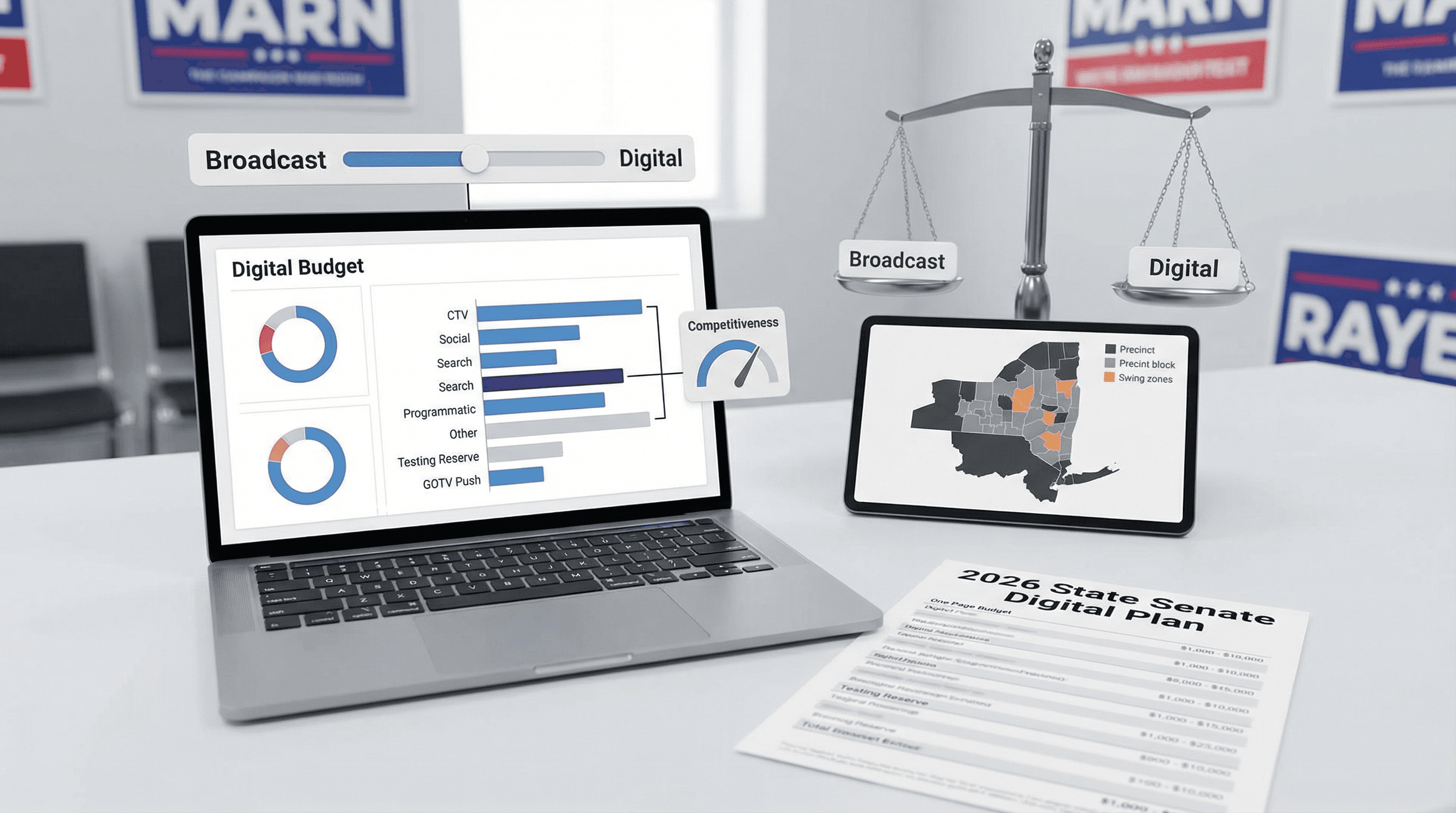
Thinking about how much a state Senate race should spend on digital ads in 2026? It's a big question, and honestly, there's no single dollar amount that fits every situation. The political landscape is always changing, and how campaigns reach voters is shifting too. We're seeing more money go towards online ads, especially with new ways to watch TV. Figuring out the right political ads budget for state senate contests means looking at a lot of different pieces. Let's break down what goes into that decision.
Key Takeaways
Total political spending for the 2025-2026 election cycle is projected to be around $10.8 billion, a record high. This includes significant spending on congressional races, with the Senate expected to see around $2.8 billion.
Digital advertising, particularly Connected TV (CTV), is becoming a major part of campaign spending, projected to reach $2.5 billion. While broadcast TV still holds the largest share, digital offers new ways to reach voters.
The amount spent on digital ads for a state Senate race depends heavily on how competitive the race is, who the target voters are, and the size of the area the campaign needs to cover.
Campaigns can look at what similar races spent in the past to get an idea of a budget. How much money a candidate can raise and the support they get from their party or PACs also play a big role.
Effectively using a digital political ads budget state senate requires smart spending across different online platforms, tracking what works, and being ready to change tactics based on real-time results.
Understanding the 2026 Political Ads Budget State Senate Landscape
Projected Overall Political Spending for the 2026 Cycle
Alright, let's talk numbers. The 2026 election cycle is shaping up to be a big one, and when we talk about political ads, especially for state senate races, we're looking at some serious cash. Experts are predicting that the total spending for the entire 2026 cycle could hit around $10.8 billion. That's a pretty hefty sum, and it's expected to be the most expensive midterm cycle ever, beating out the 2021-2022 cycle by over 20%. It's getting close to what we saw in the 2024 presidential election, which was around $11.2 billion. This surge isn't just for the big national races, either; it trickles down to state and local contests.
Key Factors Influencing Campaign Expenditures
So, what drives all this spending? A few things, really. First off, the general political climate plays a huge role. If things are really heated nationally, campaigns tend to spend more across the board. Then there's the competitiveness of specific races. A close contest for a state senate seat in a swing district is going to see way more ad dollars than a race where one candidate is a clear favorite. We also see a lot of spending from issue advocacy groups, not just candidates themselves. They're pushing their own agendas, and that adds to the overall pot.
Here's a quick look at where some of the money has been going so far in the 2025-2026 cycle:
Candidate Spending: $625.4 million raised, $333.7 million spent (as of June 30, 2025).
Party Committees: $449.7 million raised, $357.9 million spent (as of June 30, 2025).
Issue Advocacy: A significant portion of the $1.067 billion tracked so far this year came from issue advertisers (73%).
The sheer volume of money being spent means campaigns have to be smarter than ever about where their dollars go. It's not just about blanketing the airwaves anymore; it's about targeted messaging.
Historical Spending Trends in Midterm Elections
Looking back, midterm elections have always been expensive, but the trend is definitely upward. The 2021-2022 cycle saw about $8.9 billion spent, and now we're projecting over $10 billion for 2025-2026. What's interesting is that even the off-year spending, usually a smaller chunk, has been breaking records. By late August 2025, spending was already around $900 million, which is way up compared to previous off-years. This early spending suggests campaigns are getting started sooner and are more aggressive from the get-go. It's a sign that the stakes feel higher for many of these races.
Digital Advertising's Growing Role in State Senate Races
It feels like everywhere you look these days, there's an ad popping up online. Political campaigns are definitely catching on to this, and for state Senate races, digital ads are becoming a really big deal. It's not just about reaching people anymore; it's about reaching the right people, efficiently.
Digital Ad Spending vs. Traditional Media
For a while there, TV ads were king. You'd see them during the evening news, during football games – you know the drill. But things are changing. While TV still gets a chunk of the money, digital is eating into that share. Think about it: people are spending more time online, on their phones, tablets, and smart TVs. Campaigns are following them there.
Here's a rough idea of where the money went in recent cycles (these are general trends, not exact figures for every race):
Media Type | % of Digital Spend (Approx.) |
|---|---|
Social Media | 40% |
Search Engines | 25% |
Display/Programmatic | 20% |
Video (Pre-roll) | 15% |
The shift towards digital allows campaigns to be much more precise with their message and their budget. Instead of a broad TV ad that might reach thousands of uninterested viewers, a digital ad can be shown only to voters in a specific district who meet certain criteria.
The Rise of Connected TV (CTV) in Campaigns
Connected TV, or CTV, is a big part of this digital surge. This is basically any TV that connects to the internet – think smart TVs or devices like Roku and Apple TV. People are cutting the cord on traditional cable, and they're watching streaming services instead. Campaigns know this. They're putting more money into ads that show up on these streaming platforms. It's like TV advertising, but with the targeting capabilities of digital.
Campaigns are finding that CTV offers a way to get that big-screen impact without the massive waste of traditional broadcast. You can target specific zip codes, demographics, and even interests, making your ad dollars work harder.
Social Media's Impact on Down-Ballot Races
Social media platforms like Facebook, Instagram, and X (formerly Twitter) have become battlegrounds. For state Senate races, which are often considered 'down-ballot' compared to national races, social media is a game-changer. It's often more affordable than other forms of advertising, and it allows for direct interaction with voters. Candidates can share their message, respond to questions, and even mobilize supporters – all in one place. This direct line to voters can be incredibly powerful, especially when competing against better-funded opponents who might rely more on traditional media.
Factors Determining Digital Ad Spend for State Senate Campaigns
So, you're running for State Senate and wondering how much to set aside for digital ads. It's not a one-size-fits-all answer, that's for sure. Several big things play a role in how much you'll likely end up spending.
Competitiveness of the State Senate Race
This is probably the biggest driver. If your race is in a swing district or if polls show it's neck-and-neck, you're going to need to spend more. Think of it like this: if everyone's fighting for the same piece of pie, you need more resources to get your slice. A race where one party has a huge advantage might not see as much digital ad spending because the outcome is less in doubt. Campaigns in hotly contested areas often see digital ad budgets climb significantly, sometimes reaching hundreds of thousands of dollars, just to get their message out.
Target Audience and Voter Demographics
Who are you trying to reach? Different age groups and demographic segments spend their time on different online platforms. If your target voters are younger, you'll likely focus more on social media like TikTok and Instagram. If you're aiming for older voters, maybe connected TV (CTV) or even Facebook ads will be more effective. Understanding your voter base is key to not wasting money on platforms they don't use. For instance, a campaign targeting suburban women might allocate funds differently than one focused on rural working-class men.
Geographic Reach and Market Size
Where is your district? A statewide race, obviously, requires a much larger budget than a race for a single county or city senate seat. Even within a state senate district, the size and population density matter. Reaching voters in a sprawling rural district with limited broadband access is different from reaching voters in a dense urban area. Larger media markets, like those around major cities, generally come with higher advertising costs. You might see spending in the millions for statewide races, while a smaller district might spend tens of thousands. For example, the top markets for political ads often see huge sums spent, with New York, NY, and Washington, DC, leading the pack in recent cycles.
The amount spent on digital ads isn't just about the total budget; it's about smart allocation. A campaign needs to consider how many voters they need to persuade or mobilize within their specific geographic and demographic targets. This often means prioritizing platforms and messaging that offer the best return for the money spent, especially when dealing with limited resources.
Here's a rough idea of how competitiveness might influence spending:
Race Competitiveness | Estimated Digital Ad Spend Range |
|---|---|
Low (Safe Seat) | $10,000 - $50,000 |
Medium (Leans One Party) | $50,000 - $250,000 |
High (Toss-up) | $250,000 - $1,000,000+ |
Remember, these are just estimates. Actual spending can vary wildly based on the specific dynamics of the election. Early fundraising success can also significantly impact how much a campaign can afford to spend on digital ads, with some candidates raising hundreds of millions in the initial stages of a cycle [de6b].
Benchmarking Digital Ad Budgets for State Senate Contests
So, how much should a state senate campaign actually spend on digital ads? It's not a one-size-fits-all answer, but we can look at a few things to get a better idea. Comparing your race to similar contests is a smart starting point. Think about races in states with similar populations, economies, and political leanings. What did those campaigns spend on digital? Were they competitive? Did they win?
Analyzing Spending in Similar Races
Looking at past campaigns in comparable districts can give you a ballpark figure. For instance, if a state senate race in a neighboring state with a similar number of registered voters and a close partisan split spent around $150,000 on digital ads, that's a data point. We're not talking about presidential races here; we're focusing on the down-ballot contests that often get overlooked but are super important.
Here's a rough idea of how digital ad spending might break down in different types of state senate races, based on general trends:
Race Competitiveness | Estimated Digital Ad Spend Range |
|---|---|
Low (Safe Seat) | $10,000 - $50,000 |
Medium (Leans One Party) | $50,000 - $200,000 |
High (Toss-up) | $200,000 - $750,000+ |
Candidate Fundraising Capabilities
Let's be real, you can't spend money you don't have. A candidate who's a fantastic fundraiser will naturally have a bigger budget for everything, including digital ads. If you're bringing in hundreds of thousands of dollars, you can afford to put a significant chunk into reaching voters online. If the fundraising is more modest, you'll need to be much more strategic and efficient with every dollar.
Party and PAC Support for Digital Campaigns
Don't forget about outside help. Sometimes, the state party or Political Action Committees (PACs) will chip in, especially for key races. They might run their own digital ads supporting your candidate, or they might give your campaign direct funding that can be earmarked for digital efforts. This support can significantly boost your digital ad budget beyond what the campaign itself raises.
The political advertising landscape is always shifting. What worked even a few years ago might not be as effective today. It's important to stay flexible and be ready to adjust your spending based on what the data tells you about voter engagement and ad performance. Trying to guess what to spend without looking at actual results is just a shot in the dark.
Strategic Allocation of Digital Political Ads Budget State Senate
Optimizing Spend Across Digital Platforms
So, you've got your digital ad budget for your state senate race. Now what? It's not just about throwing money at Facebook ads and hoping for the best. You need a plan. Think about where your voters actually spend their time online. Are they scrolling through TikTok, watching YouTube, or maybe catching up on news sites? Different platforms reach different people, and you need to be smart about where your dollars go. The goal is to get your message in front of the right eyes, at the right time, without wasting a dime.
Here’s a quick look at how you might break down your spending:
Social Media (Facebook, Instagram, X, etc.): Great for direct voter engagement, microtargeting specific demographics, and rapid response. You can get pretty granular with who sees your ads.
Connected TV (CTV) / Streaming Services: This is getting big. It’s like TV ads but for people who stream their shows. It offers broad reach with some targeting capabilities, especially for reaching older or more affluent voters who might not be on social media as much.
Search Engine Marketing (SEM): When people are actively looking for information about candidates or issues, you want to be there. Think Google ads.
Digital News Outlets & Websites: Reaching voters who consume news online. This can include banner ads or sponsored content on local news sites or politically focused blogs.
Measuring Return on Investment for Digital Ads
Okay, you've spent the money. How do you know if it worked? This is where things get interesting, and honestly, a bit tricky. You can't just look at likes and shares. You need to connect ad spending to actual voter actions or shifts in opinion. This means tracking things like website visits from ad campaigns, sign-ups for email lists, or even changes in voter sentiment through polling. The real win is seeing your ad spend translate into votes.
Some common ways campaigns try to measure this:
Conversion Tracking: Did someone click an ad and then sign up to volunteer or donate? That’s a conversion.
A/B Testing: Running two versions of an ad to see which one performs better. Simple, but effective.
Geographic Performance Analysis: Looking at which areas saw the most impact from your digital ads.
Voter File Integration: Matching ad exposure data with voter files to see if targeted voters actually turned out or changed their minds.
It’s easy to get lost in the numbers, but remember the ultimate goal: persuading voters. If an ad isn't moving the needle, even if it's getting a lot of clicks, it might be time to rethink the message or the audience.
Adapting Strategies Based on Real-Time Data
Political campaigns are not static. What works on Monday might not work on Friday. The digital ad world moves fast, and you need to be ready to pivot. If a particular ad creative isn't getting traction, or if your opponent suddenly launches a new attack, you need to be able to adjust your spending and messaging quickly. This means having systems in place to monitor your ad performance daily, or even hourly. Flexibility is key to winning the digital ad war.
Think about it like this:
Monitor Performance: Keep a close eye on your key metrics across all platforms.
Analyze Trends: What's working? What's not? Are there unexpected reactions to your ads?
Reallocate Budget: Shift funds from underperforming ads or platforms to those that are showing promise.
Test New Creative: Don't be afraid to try new ad copy, images, or videos based on what you're learning.
Respond to Opponents: If your opponent is running a strong digital campaign, you need to counter it effectively and quickly.
The Evolving Digital Advertising Ecosystem for Campaigns

The way campaigns reach voters is always changing, and the digital ad world is no different. What worked even a few years ago might not be the best approach today. It’s like trying to use an old flip phone to navigate a modern city – you’ll get lost fast.
Impact of Changing Media Consumption Habits
People aren't watching TV the way they used to. More and more folks are cutting the cord and streaming shows, which means ads on traditional broadcast TV aren't hitting as many eyeballs. This shift means campaigns need to think about where people are actually spending their time. Connected TV (CTV) is a big deal now, offering a way to get ads in front of viewers who are streaming content. It’s not just about reaching people; it’s about reaching them on the platforms they prefer. This is a key part of campaign trends for 2026.
Emerging Digital Advertising Technologies
New tech pops up all the time. Think about AI, for example. It’s starting to play a bigger role in how ads are created and placed. AI can help figure out who to target and when, making ad spending more efficient. We're also seeing more sophisticated ways to track ad performance, even with privacy changes. This means campaigns need to stay on top of these tools to make sure their message is seen by the right people at the right time.
Navigating the Digital Advertising Landscape in 2026
So, what does this all mean for a state senate race in 2026? It means being flexible and smart. You can't just throw money at the problem and hope for the best. Campaigns need to understand:
Where voters are consuming media (streaming, social, search, etc.).
Which digital platforms offer the best return for their specific goals.
How to use data to adjust their ad buys in real-time.
The digital ad space is constantly shifting. What's effective today might be old news tomorrow. Campaigns that succeed will be the ones that are quick to adapt, willing to experiment with new technologies, and focused on reaching voters where they are, not where they used to be.
For instance, understanding ad spending across different platforms is becoming more important. Tools that provide insights into creative performance and market trends can help campaigns make better decisions. This kind of detailed information helps campaigns refine their message and media impact.
So, What's the Bottom Line for 2026?
Alright, so we've looked at all the numbers and trends. It's clear that political campaigns, especially for state senate races, are spending more on digital ads than ever before. While it's tough to give one exact dollar amount that fits every single race, the overall picture shows a big jump in spending. Campaigns are pouring money into reaching voters online, and this isn't slowing down. Expect to see digital ads play an even bigger role in how candidates connect with people in 2026. It’s not just about TV anymore; the internet is where a lot of the action is happening, and campaigns know it.
Frequently Asked Questions
How much money is expected to be spent on political ads in 2026?
Experts predict that a record-breaking $10.8 billion will be spent on political ads for the 2025-2026 election season. This is a big jump from previous years, showing that campaigns are spending more and more to get their message out.
Are digital ads becoming more important than TV ads for campaigns?
While TV ads still get a lot of money, digital ads are really growing. Connected TV (CTV), which is like watching shows on streaming apps, is getting a huge chunk of the ad budget. Social media is also a big deal, especially for races that aren't for national office.
What makes a state senate race need more or less money for digital ads?
A few things matter. If a race is super close and both sides are fighting hard, more money will be spent on ads. Also, who the campaign is trying to reach—like young voters or older voters—and how many people live in the area where the race is happening plays a big role.
How can a campaign figure out how much to spend on digital ads?
Campaigns look at how much money similar races spent in the past. They also consider how much money the candidate can raise and if big groups like political parties or PACs are helping out with ad money.
How should campaigns decide where to put their digital ad money?
It's smart to spread the money across different online places where voters spend their time. Campaigns should also track if their ads are actually working and helping them get votes. If something isn't working, they need to be ready to change their plan quickly.
Are there new ways campaigns are using digital ads?
Yes, things are always changing! More people are watching TV through streaming, so ads on those platforms are getting popular. Campaigns are also looking for new technologies to reach voters online in smarter ways as people's habits for watching and getting information change.