
Carlos Courtney
Political Ads
How Much Money You Actually Need to Win a State Legislature Seat With Digital Ads in 2026
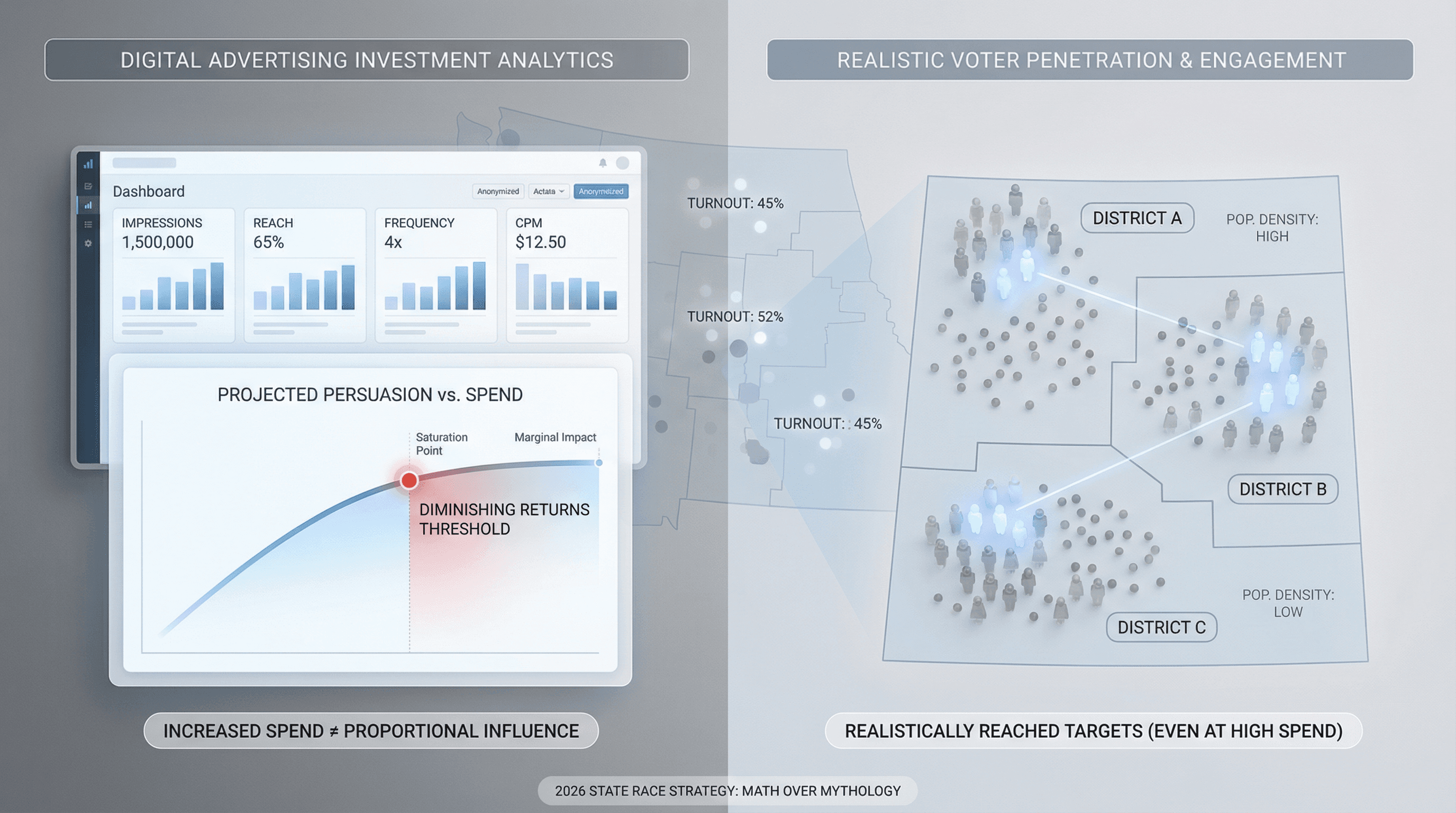
Thinking about running for state legislature in 2026? It's a big step, and knowing how to reach voters is key. Digital ads are a huge part of that now. But how much cash do you actually need to spend to get your message out there and win? It's not a simple number, because a lot of things play into it. We'll break down what goes into the cost of digital ads for state races, so you can get a clearer picture of the budget you'll need.
Key Takeaways
Digital ad costs for state legislature races in 2026 will vary a lot based on your district, how long you run ads, and how often you show them to people.
Understanding metrics like Cost Per Mille (CPM) and Cost Per Click (CPC) helps you figure out how far your money goes.
Targeting the right voters on social media and search engines is more important than just spending a lot.
Don't forget about old-school methods like door-knocking; they can work really well with digital ads.
The type of race—whether it's a competitive district, a safe seat, or an open one—will heavily influence how much you need to spend on digital ads.
Understanding Digital Ad Spend for State Legislature Races
So, you're thinking about running for state legislature and want to know how much to set aside for digital ads in 2026. It's a smart question to ask. The way campaigns reach voters has changed a lot, and digital is a huge part of that now. Gone are the days when just TV and mailers did the trick. Today, people spend a ton of time online, and that's where a lot of the political advertising action is.
The Evolving Landscape of Political Advertising
Political advertising isn't what it used to be. Think about it: your grandparents probably saw most political messages on TV or in their mailbox. Now, we've got social media feeds, streaming services, news websites, and all sorts of apps. This shift means campaigns have to be everywhere their voters are, and that includes the digital space. It's not just about getting your name out there anymore; it's about connecting with people where they are, when they're most likely to pay attention. This means understanding platforms like Facebook, Instagram, X (formerly Twitter), and even newer ones that might pop up. The goal is to cut through the noise, and that takes a strategic approach to advertising. It's a whole new ballgame compared to even ten years ago, and it's constantly changing. For instance, the way Congress handles budget matters can influence the overall economic climate, which in turn affects campaign funding and spending [2c1f].
Key Factors Influencing Digital Ad Costs
What makes digital ads cost what they do? A few things really drive the price. First, where you're advertising matters a lot. Targeting a whole state is way more expensive than targeting just a few specific towns or even neighborhoods. Then there's the competition. If a lot of other campaigns or groups are trying to reach the same voters you are, ad prices go up because everyone's bidding for the same ad space. Think of it like a crowded auction. The time of year also plays a role; election season itself sees a spike in ad costs. Finally, the type of ad and how often you want it seen affects the budget. A simple banner ad is cheaper than a polished video, and running ads constantly costs more than running them just a few times.
Here's a quick look at some common cost metrics:
Cost Per Mille (CPM): This is the cost to show your ad 1,000 times. Higher CPM means it costs more to get your ad in front of people.
Cost Per Click (CPC): This is what you pay each time someone clicks on your ad. It's good for driving traffic to a website or landing page.
Cost Per Action (CPA): You pay only when someone takes a specific action, like signing up for an email list or donating. This is often more expensive per impression but can be more efficient.
Defining Your Target Audience for Maximum Impact
Before you spend a dime on digital ads, you absolutely need to know who you're trying to reach. Trying to talk to everyone is like talking to no one. You need to get specific. Who are the likely voters in your district? What are their concerns? What issues do they care about most? Are they young families, retirees, small business owners? Where do they get their information online? Answering these questions helps you tailor your message and choose the right platforms. For example, if you're targeting younger voters, platforms like TikTok or Instagram might be more effective than Facebook. If you're aiming for older voters, Facebook or even certain news websites might be better. Getting this right means your ad money is spent efficiently, reaching the people most likely to support you, rather than just shouting into the void.
You can't just throw money at digital ads and expect results. It requires a deep understanding of the electorate and a precise strategy. Without knowing your audience, your ads might as well be invisible, no matter how much you spend.
Estimating Your Digital Advertising Budget
Alright, so you're thinking about running for state legislature and want to know how much to set aside for digital ads. It's not a one-size-fits-all answer, but we can break down the key pieces to help you figure it out. The biggest chunk of your budget will likely go towards reaching voters where they are online.
Cost Per Mille (CPM) and Cost Per Click (CPC) Benchmarks
When you're looking at digital ads, you'll hear terms like CPM and CPC. CPM stands for Cost Per Mille, which is the cost for every thousand times your ad is shown. CPC is Cost Per Click, meaning you pay each time someone clicks on your ad. These numbers can really vary. For state legislative races, you might see CPMs anywhere from $5 to $25, and CPCs from $0.50 to $3.00 or even more, depending on how competitive the race is and who you're trying to reach. It's a good idea to look at what similar campaigns in your area have spent; sometimes you can find this info publicly. Keep in mind that these are just averages, and your actual costs could be higher or lower. The sheer volume of political ads online is massive; in 2022, over 98,000 advertisers spent $2.1 billion on ads across major platforms [9055].
Geographic Targeting and Its Cost Implications
Where you want your ads to show up makes a big difference. If you're targeting a specific town or even a few neighborhoods within a larger city, it's usually cheaper than trying to reach an entire state. However, if your district is densely populated or has a lot of competing campaigns, even a small geographic area can get expensive quickly. You're essentially bidding against other advertisers for the attention of those specific voters. Think about it like this:
Smaller, more focused areas: Might have lower overall costs but could have higher CPMs if many campaigns are targeting the same small group.
Larger, less defined areas: Could have lower CPMs but you might end up paying to show ads to people outside your district, which is a waste of money.
Campaign Duration and Ad Frequency
How long do you plan to run your ads, and how often do you want people to see them? Running ads for a longer period, say six months, will cost more overall than a concentrated two-week blitz. But a short burst might not be enough to get your message through. Ad frequency is also key. You don't want to annoy people by showing them the same ad over and over, but you do want them to see your message enough times to remember it. A good rule of thumb is to aim for a frequency of 3-5 times per voter over the course of the campaign. This means a voter might see your ad three to five times in total. It's a balancing act between getting enough exposure and not overspending.
Figuring out your digital ad budget isn't just about picking a number. It's about understanding the mechanics of online advertising, knowing who you need to talk to, and being smart about where and how often your message appears. Don't just throw money at it; be strategic.
Here’s a quick look at how different factors can affect your budget:
District Competitiveness: A swing district will cost more than a safe seat.
Incumbency: Running against an incumbent often means a bigger budget is needed to get your name out there.
Open Seats: These can be very expensive because everyone is starting from scratch.
Target Audience: Reaching a very specific demographic might cost more per person than a broader reach.
Digital Ad Strategies for State Legislature Victories
So, you're running for state legislature and want to make a splash with online ads. It's not just about throwing money at Facebook and hoping for the best. You need a plan, a smart one. Think of it like this: you wouldn't just randomly knock on doors, right? Same goes for digital. We need to be strategic.
Leveraging Social Media Platforms for Engagement
Social media is where a lot of people spend their time, so it makes sense to be there. But which platforms? And how do you actually get people to pay attention? It's not just about posting pretty pictures. You need to talk with people, not just at them. Think about what your potential voters care about. Are they worried about local schools? Property taxes? Use that. Short videos explaining your stance on an issue can work well. Polls are great for getting people involved, and responding to comments shows you're listening. The goal is to build a community, not just broadcast messages.
Here’s a quick look at how different platforms can be used:
Facebook: Good for reaching a broad range of voters, especially older demographics. Use targeted ads based on location and interests. Live Q&A sessions can be very effective.
Instagram: Great for visual content. Share photos from your campaign events, infographics about your platform, and short video clips. Stories are good for behind-the-scenes looks.
X (formerly Twitter): Best for quick updates, engaging in real-time conversations, and responding to news. It’s also a good place to share links to longer content on your website.
TikTok: If you're trying to reach younger voters, this is the place. Short, engaging videos that are creative and authentic can go viral.
Search Engine Marketing for Voter Reach
When people have a question about an election or a candidate, where do they go? Usually, Google. That's where search engine marketing, or SEM, comes in. It means your ads show up when people are actively looking for information related to your race. This is powerful because you're reaching people who are already interested. You can bid on keywords like "[Your State] legislature candidates" or "[Your District] election info." This way, when someone searches for those terms, your campaign ad pops up. It’s a direct way to capture voters who are in research mode.
Video Advertising and Its Effectiveness
Video is king, or at least it feels like it these days. People tend to watch videos more than they read long blocks of text. For a state legislature race, a well-made video can tell your story, introduce your family, explain your core issues, and show your personality. It’s a way to connect on a more personal level. You can use these videos on social media, your website, and even in targeted digital ads. Think about different lengths: short, punchy ads for social media feeds, and slightly longer ones (maybe 1-2 minutes) for people who click through to learn more. Authenticity is key here; polished, corporate-style ads often fall flat.
When planning your video content, consider what message you want to send. Is it about your personal journey, your policy positions, or your vision for the district? Tailor the video to the platform and the audience you're trying to reach. A quick explainer video might work best on X, while a more in-depth look at your background could be perfect for YouTube or your campaign website.
Beyond Digital: Complementary Campaign Tactics
While digital ads are a big part of getting your message out there in 2026, they really only tell part of the story. Think of it like this: digital ads are the megaphone, but you still need people on the ground to actually connect with voters. Relying solely on screens means you're missing out on some seriously effective ways to build support and get people to the polls.
The Enduring Power of Door-to-Door Canvassing
Knocking on doors might seem old-school, but it's still one of the most direct ways to talk to people. When you show up at someone's doorstep, you're not just another ad they can scroll past. You're a real person, asking for their vote, and you can have a genuine conversation. This personal touch can make a huge difference, especially in local races where people often know their neighbors and want to feel heard.
Direct Voter Contact: Builds personal relationships and trust.
Feedback Loop: Allows you to hear voter concerns firsthand.
Mobilization: Encourages turnout by making a personal ask.
Integrating Digital Efforts with Traditional Outreach
So, how do you make sure your digital ads and your door-knocking efforts work together? It’s all about making them talk to each other. For example, if your digital ads are targeting a specific neighborhood about a certain issue, your canvassers in that same neighborhood can be armed with information about that issue. They can reference the ads people might have seen online, making the conversation feel more relevant. It’s about creating a consistent message across all your campaign activities.
The goal is to create a unified campaign experience for the voter. When digital and traditional methods align, they reinforce each other, making your message stickier and more persuasive. It's not about choosing one over the other; it's about making them a team.
Volunteer Networks as a Campaign Asset
Don't underestimate the power of your supporters. A strong network of volunteers can be your most valuable resource. These are people who believe in your campaign and are willing to put in the time to help. They can help with everything from making phone calls and sending emails to stuffing envelopes and, yes, knocking on doors. Organizing and motivating these volunteers effectively can multiply your campaign's reach far beyond what paid staff alone could achieve.
Here’s a look at what volunteers can do:
Canvassing: Reaching voters directly at their homes.
Phone Banking: Making calls to voters to share information and encourage turnout.
Event Support: Helping with logistics for rallies, town halls, and other campaign events.
Data Entry: Assisting with organizing voter information and contact lists.
Literature Distribution: Handing out flyers and informational materials.
Independent Expenditures and Their Role
Understanding Independent Ad Spending
So, you're running for state legislature, and you've got your digital ad strategy mostly figured out. But there's another big player in the game you need to know about: independent expenditures. These are basically ads or other campaign communications paid for by groups not officially connected to your campaign. Think of them as outside forces trying to help or hurt your chances, often with their own money and their own messages. They can significantly shape voter perception, sometimes more than your own campaign ads.
These groups can be anything from political parties and PACs to issue advocacy organizations or even wealthy individuals. The key thing is they aren't supposed to coordinate directly with your campaign. If they spend over a certain amount (usually $1,000), they have to report it to the state, but they operate separately. This means you might see ads supporting you that you didn't pay for, or, more commonly, ads attacking you that your campaign had no hand in creating.
Major Independent Spenders and Their Strategies
In many state races, you'll see major parties or established political action committees (PACs) making significant independent expenditures. They often have deep pockets and a clear agenda. For instance, a party might fund digital ads to boost their endorsed candidates or run negative ads against the opposition. Sometimes, these groups are funded by large corporations, unions, or even wealthy donors who want to influence the outcome without being directly tied to a candidate.
Here's a look at how some different types of groups might spend independently:
Political Parties: State and local party committees often spend money on digital ads, mailers, and even phone banking to support their slate of candidates. They might focus on getting out the vote for their party's nominees.
Issue Advocacy Groups: Organizations focused on specific issues (like environmental protection or business regulation) might run ads to support candidates who align with their cause, or oppose those who don't. Their messaging will likely tie the candidate to the group's core issues.
Wealthy Donors/Super PACs: Individuals with substantial financial resources, or PACs funded by them, can pour millions into a race. They often run hard-hitting ads, both positive and negative, to sway voters. Their goal is usually to elect candidates who will advance their broader political or economic interests.
The Impact of Third-Party Advertising on Races
Independent expenditures can really muddy the waters, or sometimes, provide a much-needed boost. If a well-funded group runs positive ads for you, it's like getting free advertising. However, if an opposing group spends big on negative ads, it can be tough to counter, especially if your campaign budget is tight. The sheer volume of spending by outside groups can sometimes drown out the candidate's own message.
It's important to remember that while these groups operate independently, their actions can have a direct effect on your race. You might see ads that are factually incorrect or misleading, and because they aren't from your campaign, you have limited ability to control the narrative. Staying informed about who is spending money in your district and what they're saying is key to understanding the full picture of the race.
Budgeting for Different Types of Races
Okay, so you're thinking about running for state legislature. That's a big step! Now, let's talk about money, specifically for digital ads, because it's not a one-size-fits-all situation. The amount you'll need really depends on the kind of race you're in.
Competitive Districts vs. Safe Seats
This is a pretty big one. If you're running in a district that's known to be a toss-up, where voters swing back and forth between parties, you're going to spend a lot more. Think of it like this: both parties are going to pour money in because they see a real chance to win. Your digital ad budget needs to be robust enough to get your message out there consistently and cut through the noise. We're talking about needing to reach a wider swath of voters, maybe even those who aren't super engaged yet. In these competitive races, digital ad spend can easily be tens of thousands, if not hundreds of thousands of dollars.
On the flip side, if you're in a 'safe' district – meaning it reliably votes for one party year after year – your ad spend might be lower. The incumbent or party in power might not feel the need to spend as much, and the opposing party might see it as a long shot. Your goal here might be more about reinforcing your base and making sure your supporters turn out, rather than persuading undecided voters. Still, you can't just ignore digital ads; even in safe seats, a well-placed ad can make a difference.
The Influence of Incumbency on Ad Spend
Running against someone who's already in office? That changes things. Incumbents often have name recognition and a track record that voters are familiar with. They might also have a war chest built up from previous campaigns. This means you, as the challenger, often have to spend more just to get your name and message out there. You're not just introducing yourself; you're also trying to introduce doubts about the incumbent or present a compelling alternative. Digital ads can help you do this efficiently, but you'll likely need a bigger budget to counter the incumbent's existing presence and potentially their own ad spending.
Open Seats and Increased Campaign Costs
When an incumbent decides not to run, or is term-limited out, that creates an 'open seat.' This is often where things get really interesting, and expensive. Because no one has the built-in advantage of incumbency, multiple candidates might jump into the race, and parties will see it as a prime opportunity to gain or hold onto the seat. This usually leads to a more crowded and competitive field. You'll be fighting for attention not just with other candidates but potentially with increased party spending too. Digital ad campaigns in open seats often see higher costs due to the increased competition for voter attention. It's a scramble to define yourself and connect with voters before anyone else does.
So, What's the Bottom Line?
Look, figuring out the exact dollar amount to win a state legislature seat with digital ads in 2026 isn't a simple math problem. It really depends on a lot of moving parts, like your specific district, who you're up against, and how much people are already spending. We've seen campaigns spend big, and we've also heard from folks like Assemblymember Krell who found success with good old-fashioned volunteer power and door-knocking, even with a smaller budget. While digital ads can get your message out there, they aren't the only game in town. Sometimes, a well-organized ground game or a really strong personal network can go a long way. So, while you should definitely budget for online efforts, don't forget the other ways to connect with voters. It's a mix of things, really.
Frequently Asked Questions
How much do digital ads usually cost for a state legislature race?
The cost can change a lot depending on where you are and how many people you want to reach. Sometimes, you pay for every 1,000 times your ad is seen (CPM), and other times you pay each time someone clicks on it (CPC). For state races, this could range from a few thousand dollars to tens of thousands, or even more in really competitive areas.
What's more important: social media or search ads?
Both are useful! Social media helps you connect with people and get them talking about your campaign. Search ads are great for reaching voters who are actively looking for information about candidates. Using both can help you reach more voters in different ways.
Can I win without spending a lot on digital ads?
Yes, you can! While digital ads are powerful, they aren't the only way to win. Things like talking to voters face-to-face (door-knocking) and getting volunteers to help spread the word can be very effective, especially if you have a strong network of supporters.
What is 'independent spending' in campaigns?
Independent spending happens when groups or individuals spend money on ads to support or oppose a candidate, but they aren't officially working with the candidate's campaign. They have to follow certain rules, like not coordinating with the campaign itself. This can add a lot of money to races.
Does it cost more to run in a tough race?
Absolutely. If your district is split between many voters who support different parties, or if an experienced politician is already in office, you'll likely need to spend more on ads to get your message out. Open seats, where no one is currently the incumbent, can also become very expensive.
How long should my digital ads run?
The length of your ad campaign depends on your budget and how often you want voters to see your message. Shorter, more frequent ad bursts closer to election day can be effective, but a longer campaign might be needed to build recognition and persuade voters over time. It's all about finding the right balance.