
Carlos Courtney
Meta Andromeda
Andromeda Myths Debunked: Separating Fact from Guru Fiction
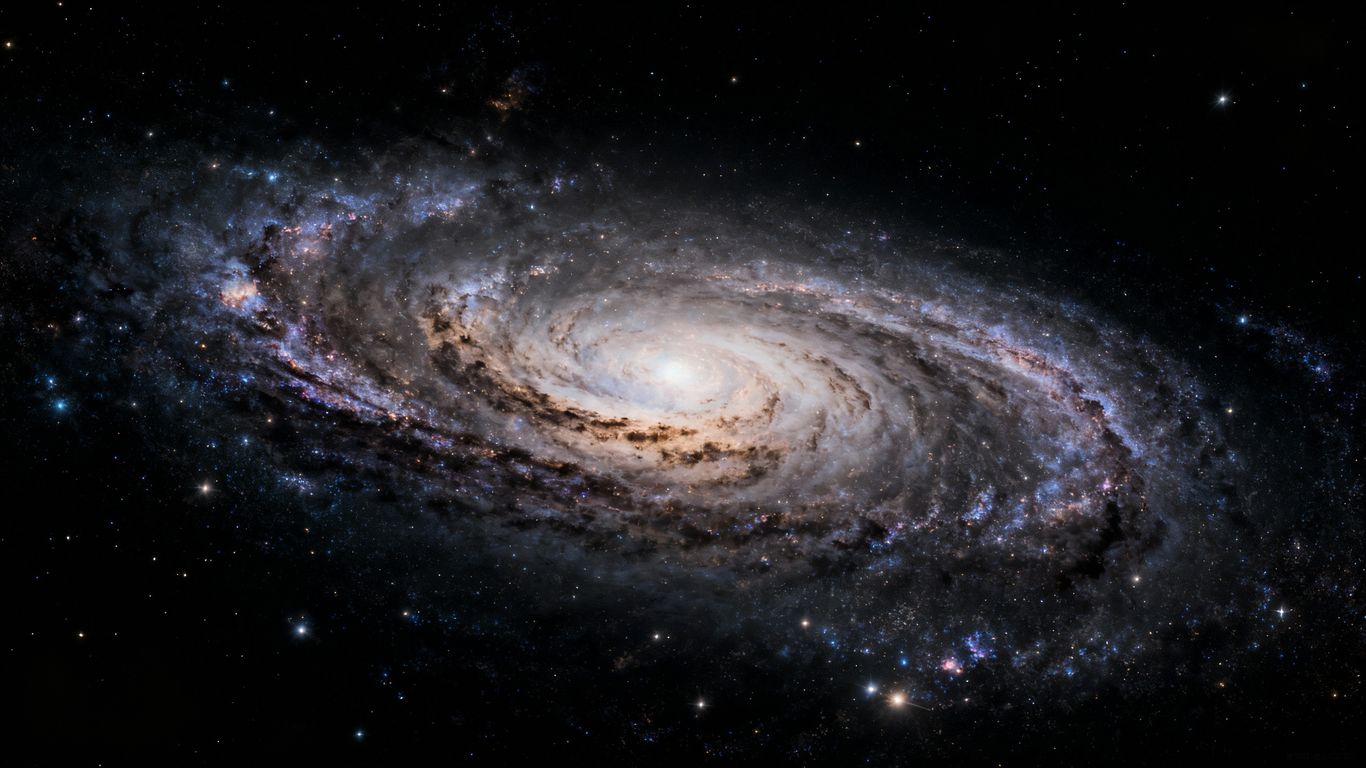
Hey everyone, welcome back to the blog! Today, we're diving into the fascinating world of the Andromeda Galaxy, but not in the way you might think. We're going to tackle some of the wild stories and ideas out there about it, and some other stuff that gets mixed up with it, and see what's actually real. Think of it as sorting through the noise to find the facts. We'll look at some old tales, some weird sea monsters, and even some flying saucers. Let's get started on debunking these Andromeda myths!
Key Takeaways
The Andromeda Galaxy is moving towards us, a fact first noted by Vesto Slipher, which helped pave the way for understanding the universe's expansion, not solely Hubble's work.
Ancient myths about Andromeda often place her in Ethiopia, though some stories link her to the Phoenician city of Joppa, and the role of sea deities like Thetis is sometimes misunderstood.
Creatures like the Kraken and the depiction of Medusa in some stories have roots in ancient lore but have evolved, sometimes being conflated with serpentine sea creatures or having their powers reinterpreted.
The Bermuda Triangle's reputation as a uniquely dangerous area is largely a modern myth, with disappearances often exaggerated or misreported, and not statistically significant compared to other ocean areas.
UFO sightings are real phenomena, but the common idea that they are alien spacecraft (the extraterrestrial hypothesis) is just one of many possible explanations, with prosaic causes like atmospheric conditions or misidentified objects being more likely.
Andromeda Myths Debunked: Celestial Misconceptions
When we look up at the night sky, it's easy to get lost in the wonder. But sometimes, our imaginations run a little wild, especially when it comes to something as grand as the Andromeda Galaxy. Let's clear up a few things that have been floating around.
The Andromeda Galaxy's True Velocity
There's a common idea that galaxies are just drifting apart, with everything moving away from everything else. While that's true on a massive scale, our neighbor, the Andromeda Galaxy, is actually heading our way. It's on a collision course with the Milky Way, expected to merge in about 4.5 billion years. This isn't some doomsday scenario, though; galactic collisions are slow, drawn-out events. It's more like a cosmic dance than a crash.
Here's a quick look at its movement:
Measurement | Value (approx.) |
|---|---|
Radial Velocity | -300 km/s |
Direction | Towards the Milky Way |
This high speed was first noted by Vesto Slipher back in 1912. He measured the light from Andromeda and saw a significant blueshift, indicating it was moving towards us. This was a big deal, paving the way for later discoveries about the universe's expansion.
Vesto Slipher's Underrated Contributions
Speaking of Vesto Slipher, his name doesn't always come up when we talk about the big discoveries in astronomy. Yet, his work was incredibly important. He was one of the first to systematically measure the speeds of what were then called "nebulae." His observations of Andromeda's approach, along with many other galaxies moving away, provided key evidence that the universe wasn't static. It was a huge step towards understanding cosmic expansion, a concept later popularized by Edwin Hubble. Slipher's meticulous work laid the groundwork for so much of what we know today about the cosmos.
Beyond the Local Group: Galactic Expansion
While Andromeda is moving towards us due to local gravitational pull within our Local Group of galaxies, the universe as a whole is expanding. This means that, on larger scales, galaxies are indeed moving away from each other. The further away a galaxy is, the faster it appears to recede. This observation, famously detailed by Hubble, is a cornerstone of modern cosmology. It's a bit like dots on a balloon being inflated – they all move apart from each other, and the ones further apart move faster.
The idea of a universe that is not only vast but also dynamic, with galaxies interacting and the very fabric of space stretching, is a profound one. It challenges our intuitive sense of a stable, unchanging cosmos and opens up a universe of incredible scale and ongoing evolution.
So, next time you gaze at the night sky, remember that Andromeda isn't just a pretty smudge of light; it's a dynamic part of our cosmic neighborhood, with a story of motion and discovery that's still unfolding. Understanding these celestial facts helps us appreciate the universe's true grandeur, far beyond any fanciful tales. For more on astronomical discoveries, check out the International Astronomical Union's resources.
Ancient Legends Re-Examined

When we talk about the Andromeda Galaxy, it's easy to get caught up in the science. But long before telescopes and spectral analysis, this celestial object was woven into the fabric of human stories. These ancient tales, often passed down through generations, offer a fascinating glimpse into how our ancestors perceived the cosmos. Let's take a look at a few of these myths and see how they connect to the stars we see today.
Cassiopeia's Boast: A Mythological Betrayal
The story of Cassiopeia, the vain queen, is a classic. She bragged that her daughter Andromeda was more beautiful than the sea nymphs, the Nereids. This angered Poseidon, the god of the sea, who sent a monstrous sea creature, Cetus, to ravage the kingdom. To appease the gods, Andromeda was chained to a rock as a sacrifice. It's a dramatic tale of pride, punishment, and a princess in peril. Luckily, the hero Perseus arrived just in time, slaying the monster and saving Andromeda. This myth highlights the ancient Greek tendency to explain natural phenomena and human foibles through divine intervention and epic narratives.
Thetis's Role in Joppa
Another version of the Andromeda myth places the sacrifice near the ancient city of Joppa, in modern-day Israel. Here, Andromeda's father, King Cepheus, was said to rule. The story remains largely the same: Cassiopeia's boast leads to Poseidon's wrath and Andromeda's near-fatal encounter with Cetus. The intervention of Perseus, often depicted as using the head of the Gorgon Medusa to turn the monster to stone, is the climax. These variations show how myths could adapt and travel, incorporating local geography and cultural nuances. The details might shift, but the core elements of divine anger and heroic rescue persist, much like how campaign strategies adapt to local conditions.
Ethiopia vs. Phoenicia: Locating Andromeda's Myth
Where exactly did this story originate? That's a question that has sparked debate. Some ancient sources place the myth in Ethiopia, with Cepheus as its king. Others point to Phoenicia, a region known for its seafaring and trade. This geographical ambiguity isn't unusual for ancient myths. The lack of precise historical records means we often rely on interpretations of texts and archaeological findings. It's a bit like trying to pinpoint the exact location of a historical event in Texas history without clear documentation – you have to piece together clues. The core narrative, however, remains consistent, emphasizing the power of the stars and the gods over human lives.
Ancient myths often served as a way to understand the world, explain natural events, and impart moral lessons. The stories surrounding Andromeda, Cassiopeia, and Perseus are no different. They reflect a worldview where the heavens were populated by powerful beings whose actions directly impacted mortal affairs. These celestial figures were not just distant lights but active participants in human drama.
The Kraken and Other Mythological Beasts
When we think of ancient myths, our minds often jump to gods, heroes, and epic battles. But let's be honest, the really cool stuff often involves monsters. And when it comes to sea monsters, few creatures capture the imagination quite like the Kraken. It's a name that conjures images of colossal tentacles rising from the deep, capable of dragging ships to their doom. But where did this terrifying legend come from, and how does it stack up against other mythical beasts?
The Kraken's True Origins
The Kraken isn't actually a creature from Greek mythology, which is a common misconception. Instead, its roots are firmly planted in Scandinavian folklore, particularly in tales from Norway and Iceland. Sailors and fishermen would tell stories of a monstrous cephalopod-like sea beast, so massive it could be mistaken for an island. These tales likely stemmed from actual sightings of giant squids, which, while not island-sized, are certainly impressive and could easily inspire fear in those who encountered them. The sheer scale of these real-life creatures, combined with the isolation and mystery of the sea, fueled the legend of the Kraken. It's a perfect example of how real-world encounters can morph into fantastical myths over time. You can find early descriptions of these sea behemoths in works like Erik Pontoppidan's "Natural History of Norway" from the 1750s, which helped popularize the legend beyond Scandinavia.
Serpentine Whales in Ancient Lore
While the Kraken is a relatively later addition to the monster canon, serpentine or whale-like sea creatures have been part of myths for millennia. Think of the Greek Ketos, the monstrous sea serpent that Poseidon sent to devour Andromeda. This creature, often depicted as a dragon-like serpent or a whale with serpentine features, played a significant role in the Andromeda myth. It's a reminder that the fear of the unknown depths and the creatures lurking within them is a very old human experience. These serpentine whales weren't just random monsters; they often served a purpose in the narrative, acting as divine punishment or a test for heroes. The story of Perseus saving Andromeda from the Ketos is a classic example of humanity battling the monstrous unknown.
Medusa's Power Beyond Her Head
Speaking of Greek myths, Medusa is another figure often associated with monstrous power. While her most famous attribute is her ability to turn people to stone with her gaze, her story is more complex than just a terrifying visage. Medusa was originally a beautiful priestess who was cursed by Athena. Her power, though horrific, was a consequence of her suffering. In some interpretations, her severed head retained its potent magic, becoming a weapon and a symbol of her enduring power. This idea of a creature's power persisting even after its demise is a common theme in mythology, highlighting the lasting impact of even monstrous figures. It makes you wonder about the true nature of power and how it can manifest in unexpected ways, even in ancient legends.
The line between myth and reality often blurs when we consider creatures of legend. What starts as a sailor's tale or a misinterpreted natural phenomenon can evolve into a deeply ingrained part of cultural folklore. These stories, while fantastical, often reflect very real human fears and experiences, like the awe and terror inspired by the vast, unpredictable ocean.
The Bermuda Triangle: A Fabricated Mystery
Okay, let's talk about the Bermuda Triangle. You've probably heard the stories – planes vanishing, ships disappearing without a trace, all in this one specific patch of the Atlantic Ocean. It sounds spooky, right? Like something out of a movie. But here's the thing: when you actually look at the facts, the whole mystery kind of falls apart.
The Loose Definition of the Triangle
First off, the "triangle" itself isn't even a real thing. It's not like there are official borders marked on a map. Depending on who you ask, the points can shift. Sometimes it's a triangle, sometimes it's more of a trapezoid. Some versions even stretch all the way to Ireland! It's a pretty flexible concept, which makes it easy to include any old disappearance that happens to be in the general vicinity. This vagueness is a big part of why the myth has legs. It's like trying to catch smoke – you can point anywhere and say, "See? Another one!"
Flight 19's Disappearance
One of the most famous stories tied to the Triangle is the disappearance of Flight 19 in 1945. Five Navy bombers went missing during a training flight, and then a search plane sent to find them also vanished. It's a dramatic tale, and it definitely fueled the mystery. However, investigations showed that the flight leader was disoriented and likely mistook his location. The weather also turned bad. The idea that this was some supernatural event is a stretch. While tragic, it's more likely a case of human error and unfortunate circumstances, not a sign of a paranormal vortex. You can read more about the general area and its history here.
Exaggerated Claims and Misreported Facts
Much of the Bermuda Triangle lore comes from writers who really leaned into the sensational. They'd often exaggerate details, leave out important information, or even misreport what happened. For instance, some ships reported missing later turned up, having simply returned to port after a delay. Others disappeared in severe storms, which, you know, happens in the ocean. The number of incidents in the Triangle isn't actually any higher than in other busy shipping lanes when you look at the statistics. It's just that these specific disappearances got bundled together and given a spooky label.
Here's a look at some common factors often ignored:
Human Error: Mistakes in navigation or judgment are common in any form of travel.
Severe Weather: The Atlantic can be unpredictable, with sudden storms and hurricanes.
Mechanical Failures: Like any machinery, ships and planes can break down.
Natural Phenomena: Rogue waves or strong currents can pose risks.
The narrative of the Bermuda Triangle thrives on the unknown. When faced with unexplained disappearances, it's easier for many to attribute them to something extraordinary rather than a combination of mundane factors. This tendency to seek out the sensational over the factual is a powerful force in myth-making.
UFOs and Extraterrestrial Encounters
Let's talk about UFOs. The term itself, Unidentified Flying Objects, is pretty straightforward, right? It just means something was seen in the sky that couldn't be immediately identified. And honestly, that's happened forever. People have seen strange lights and objects in the sky long before airplanes were even a thing. Think about it – weather balloons, unusual atmospheric conditions, even bright planets can play tricks on the eyes.
Unidentified Flying Objects: A Prosaic Reality
Most sightings, when investigated, turn out to have pretty normal explanations. We're talking about things like:
Misidentified aircraft or drones
Unusual cloud formations or weather phenomena
Bright stars or planets
Even simple optical illusions
It's easy to jump to conclusions, especially when something looks a bit out of the ordinary. But the reality is, the vast majority of these 'unidentified' objects are eventually identified as something quite mundane. It's like seeing a shadow in the dark and thinking it's a monster, only to realize it's just your coat on a chair.
The Extraterrestrial Hypothesis
Now, this is where things get really interesting, and frankly, a bit wild. The idea that UFOs are alien spacecraft is what most people think of. It's a compelling thought, isn't it? Visitors from other worlds, coming here to check us out. This concept has fueled countless stories, movies, and even new belief systems. The classic image of the 'little green men' or the more modern 'Greys' has become ingrained in our culture. But is there any solid proof? Not really. While the idea is fascinating, it remains just that – a hypothesis. The sheer distance involved in interstellar travel makes it a huge hurdle, and frankly, the idea of advanced beings traveling light-years just to conduct strange experiments or abduct people seems a bit far-fetched to me.
The allure of the extraterrestrial explanation is powerful, tapping into our curiosity about the unknown and our place in the universe. However, without concrete evidence, it remains in the realm of speculation, however popular.
Beyond Aliens: Other UFO Theories
So, if not aliens, then what? Well, the theories get pretty creative. Some people suggest that UFOs might be advanced technology from future humans, or perhaps even beings from other dimensions. There's also the idea of 'cryptoterrestrials' – hidden beings from Earth itself. And, of course, there are the persistent conspiracy theories involving governments hiding the truth. It's a whole spectrum of ideas, from the slightly unusual to the downright bizarre. It just goes to show how much we don't know, and how our imaginations can run wild when faced with the unexplained. For those interested in the history of how these ideas spread, looking into the early days of ufology can be quite revealing. It's a complex topic with a lot of layers, and understanding how these narratives developed is key to separating fact from fiction. The way these stories are told can sometimes be as fascinating as the supposed events themselves, influencing how we perceive the world around us, much like the vibrant murals and drone shows that tell Houston's unique story [ba2e].
The Myth of Repressed Memory
Conjectures Versus Established Theories
Okay, so let's talk about repressed memories. You know, the idea that really traumatic stuff can just get shoved way, way down, and then later, maybe in therapy, it all comes flooding back? It sounds dramatic, and honestly, it's a concept that's really captured the public imagination for a while. But here's the thing: the science just doesn't really back it up. Research suggests that people actually tend to remember traumatic events, not forget them. It’s more like our brains try to make sense of difficult experiences, not erase them entirely. The whole notion of memories being completely blocked and then suddenly recovered is more of a conjecture than a proven theory. It's easy to confuse ideas we can't prove or disprove yet with things we actually know to be true because they've been tested.
The Dangers of Unverified Claims
When we can't tell the difference between a guess and a fact, things can get messy, especially in fields like psychology. For a long time, some therapists operated on the idea that memories could be repressed, and they'd use certain techniques to try and bring them back. This led to some really difficult situations for families, where people were convinced that past traumas had been recovered, but there wasn't solid evidence to support it. It's a bit like a doctor trying a new, unproven treatment on a patient without telling them it's experimental. That's a huge ethical problem, right? The history of some therapeutic practices shows a pattern of making big pronouncements without enough proof, and that can cause a lot of unintended harm. It's important to be really careful about what we accept as established knowledge, especially when it affects people's lives so deeply. We need to be able to distinguish between ideas that might one day be proven and those that have already survived rigorous testing.
Psychotherapeutic Overreach in Practice
This whole debate really highlights how crucial it is to have solid evidence for therapeutic approaches. When therapists rely on ideas that haven't been properly tested, it can lead to what some call "psychotherapeutic overreach." This isn't about saying therapy doesn't work; it's about making sure the methods used are based on reliable findings. For example, the "refrigerator mother" theory from the mid-20th century wrongly blamed mothers for their children's autism, based on very little evidence. It caused immense suffering for decades. Similarly, the idea of recovered memories, while compelling, has been shown to be problematic. Studies indicate that memory is more resilient than previously thought, and that recovered memories might be influenced by suggestion rather than accurate recall. It's a good reminder that even well-intentioned therapeutic ideas need to stand up to scientific scrutiny. If you're interested in the history of these debates, looking into the work of researchers like Elizabeth Loftus can be quite eye-opening regarding the nature of memory.
Here's a quick look at how memory recall can be influenced:
Leading Questions: Asking questions in a way that suggests a particular answer can shape how someone remembers an event.
Post-Event Information: Information received after an event can be incorporated into the memory of the event itself.
Therapeutic Suggestion: In a therapeutic setting, a patient might unconsciously adopt suggestions from the therapist about what they should remember.
It's vital to approach claims about memory, especially those concerning trauma, with a critical and evidence-based mindset. The human mind is complex, and while therapy can be incredibly helpful, it should be grounded in scientifically supported practices.
The idea that we can forget bad experiences and then suddenly remember them later, known as repressed memory, is often questioned by experts. While it's true that trauma can affect our memories, the concept of memories being completely pushed away and then perfectly recalled is not as simple as it seems. Many psychologists now believe that memories are more like stories we tell ourselves, which can change over time. This doesn't mean the pain wasn't real, but our recollection of it might be influenced by many things. For a deeper dive into this fascinating topic and to understand how memory really works, visit our website today!
So, What's the Real Story?
Look, when it comes to Andromeda, and a lot of other stuff we hear about, it's easy to get lost in the stories. We've seen how myths can get twisted, how science gets misunderstood, and how sometimes, people just make things up. From ancient tales to modern UFO theories and even how we remember things, it’s a wild ride. The key takeaway here is to keep asking questions. Don't just accept what sounds cool or what some 'guru' tells you. Dig a little, check the facts, and remember that the universe, and our own history, is already pretty amazing without needing to add a bunch of made-up stuff. It’s about appreciating the real discoveries, like Vesto Slipher’s work on galaxy movement, and understanding that not every strange light in the sky or weird story needs an alien explanation. Let's stick to what we can actually know and explore that.
Frequently Asked Questions
Is the Andromeda Galaxy really moving towards us?
Yes, the Andromeda Galaxy is actually heading towards our own Milky Way galaxy. It's moving at a pretty high speed, about 300 kilometers per second. Scientists figured this out a long time ago, and it's a key piece of information for understanding how the universe is changing.
What's the real story behind the myth of Andromeda?
The myth of Andromeda is a classic Greek story. It often involves her being chained to a rock as a sacrifice to a sea monster. Her rescue by the hero Perseus is a famous part of the legend, though different versions of the story place her homeland in different locations, like Ethiopia or Phoenicia, which is modern-day Israel.
Are sea monsters like the Kraken real?
While the Kraken is a legendary sea monster, similar creatures like giant squid or whales have inspired such myths. The idea of large, serpentine sea creatures has appeared in stories from many cultures for a very long time.
Is the Bermuda Triangle a truly mysterious place?
The Bermuda Triangle is often called mysterious, but many of the stories about disappearances there are exaggerated or not entirely true. The number of ships and planes lost in that area isn't actually much higher than in other busy parts of the ocean. Many incidents have simple explanations.
Are UFO sightings proof of aliens?
UFO stands for Unidentified Flying Object, meaning it's something seen in the sky that can't be immediately identified. While some people believe UFOs are alien spacecraft, there are many other possible explanations, like unusual weather, aircraft, or even misidentified objects.
Can memories be 'repressed' and then recovered?
The idea of 'repressed memories' – memories that are supposedly buried deep in the mind and then brought back – is a complex topic. Experts debate how reliable recovered memories are, and it's important to tell the difference between ideas that sound good and theories that are backed up by solid evidence.