
Metaphase Marketing
Google Ads, Lead Generation, Value-Based Bidding, Enhanced Conversions, Offline Conversions
Beyond CPL: How to Optimize Google Ads for Lead Quality and Revenue

Beyond CPL: How to Optimize Google Ads for Lead Quality and Revenue in 2026
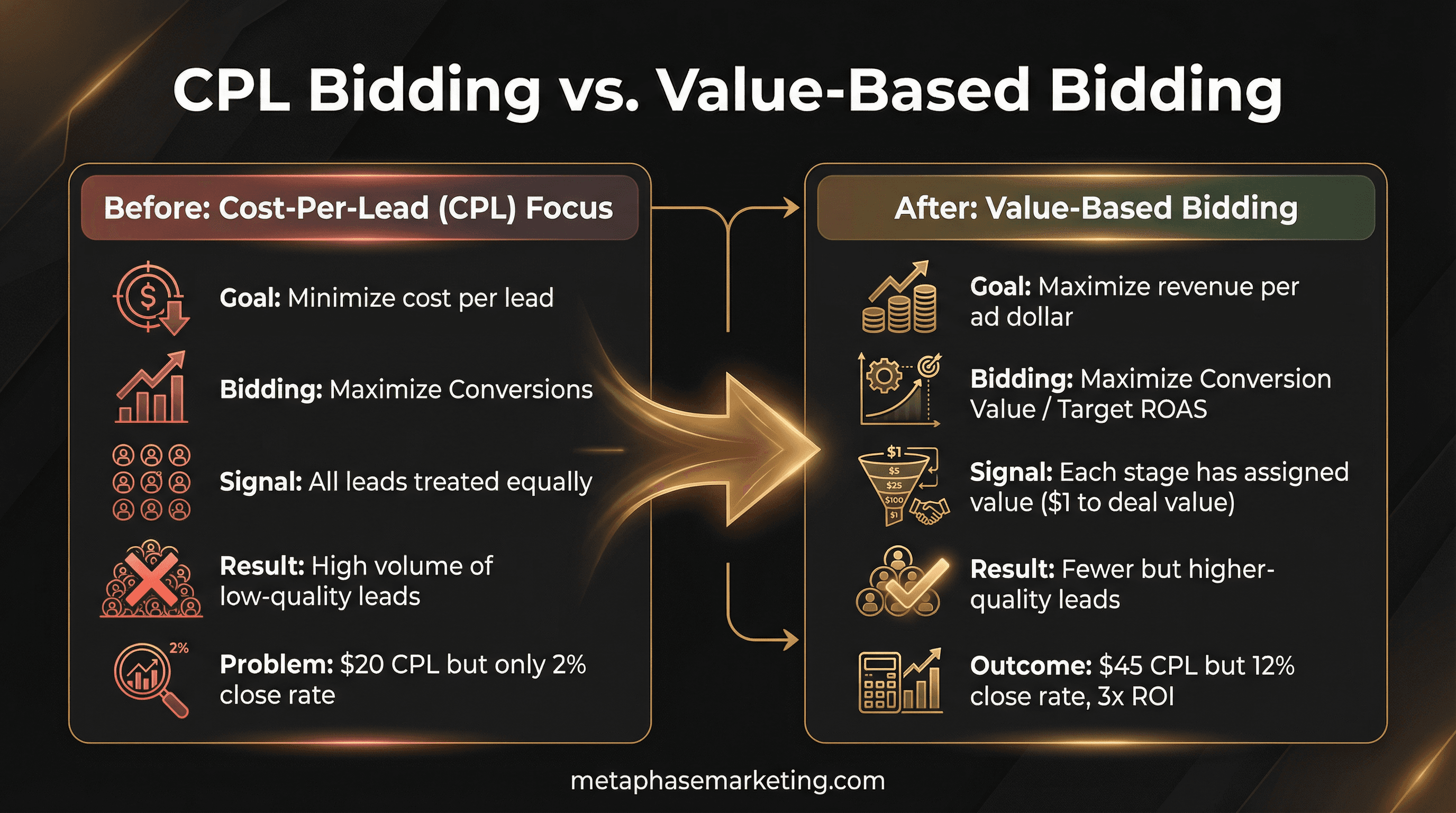
Are you stuck in the CPL trap? Obsessing over a low Cost Per Lead in Google Ads often leads to a high volume of low-quality leads that never convert. It is time to evolve your strategy. This guide will show you how to use Enhanced Conversions for Leads and Value-Based Bidding to optimize for what truly matters: revenue.
Key Takeaways
Optimizing for a low CPL often results in poor lead quality and wasted ad spend.
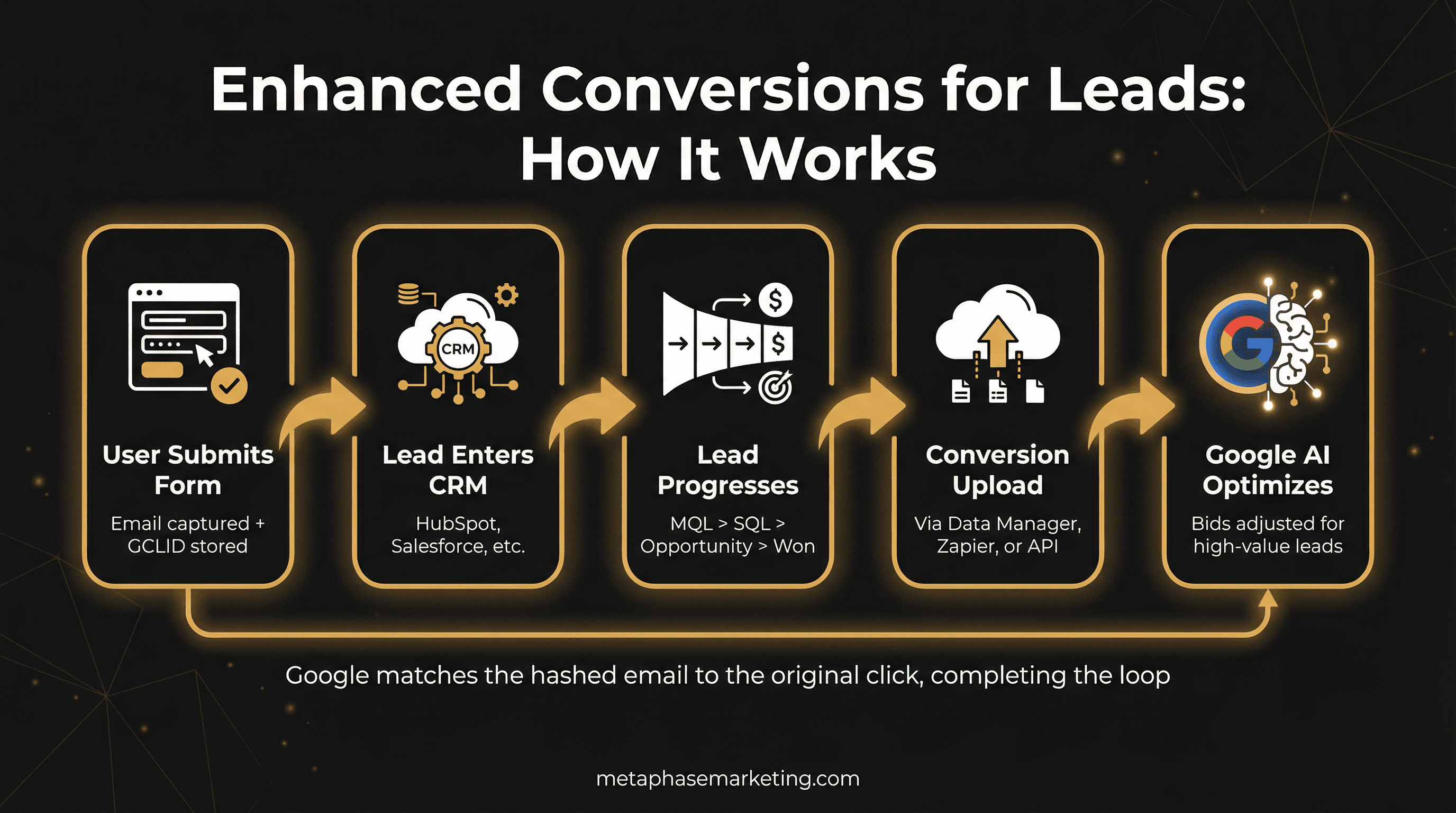
Enhanced Conversions for Leads allows you to pass back hashed first-party data (like email addresses) to improve conversion measurement.
Assigning dynamic or static values to different lead stages (MQL, SQL, Closed Won) is the key to value-based bidding.
Switching to a Target ROAS or Maximize Conversion Value bidding strategy tells Google's AI to find leads that will actually make you money.
The Problem with CPL-Based Bidding
When you optimize for Maximize Conversions with a target CPA, you are telling Google to find the cheapest possible form fills. The algorithm does not know the difference between a tire-kicker and a ready-to-buy enterprise client. This inevitably leads to a sales team buried in junk leads and a marketing team with no real ROI to show for their efforts.
Step 1: Set Up Enhanced Conversions for Leads
Enhanced Conversions is the first step to improving your signal quality. It allows you to send hashed first-party data from your lead forms to Google, which then matches it to the ad click that originated the lead.
How to Set It Up
In Google Ads, go to Tools and Settings, then Conversions.
Select your primary lead conversion action.
In the settings, turn on Enhanced conversions for leads.
Choose your implementation method: Google Tag (for GTM) or Google Ads API.
Follow the instructions to configure your website and/or CRM to pass back the hashed data.
Step 2: The Lead Value Assignment Framework
To use value-based bidding, you need to assign a monetary value to each stage of your sales funnel. This tells Google which leads are more valuable than others.
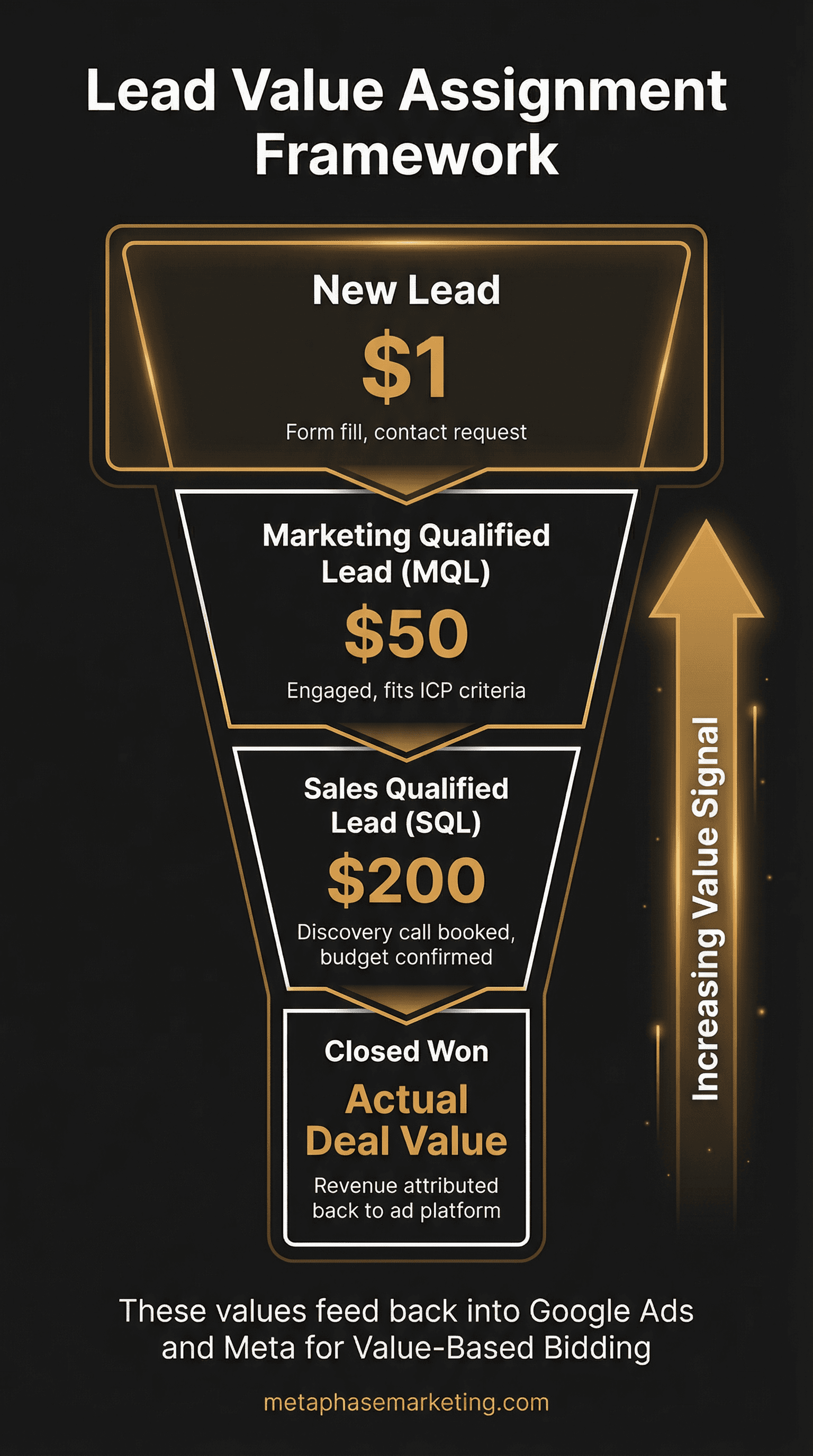
A simple framework: assign $1 for a new lead, $50 for an MQL, $200 for an SQL, and the actual deal value for a Closed Won opportunity. These values are then passed back to Google Ads during the offline conversion import.
Step 3: Switching to Value-Based Bidding
Once you have at least 30 to 50 valued conversions tracked over a 30-day period, you can make the switch.
Change your campaign's bidding strategy from Maximize Conversions (with a tCPA) to Maximize Conversion Value.
Optionally, set a Target ROAS (Return On Ad Spend) if you have enough data to set a realistic goal.
Conclusion: Let the AI Do the Work
By providing Google's AI with high-quality, value-based signals, you empower it to make smarter bidding decisions. It will automatically start bidding more aggressively for users who look like your past high-value customers and less for users who resemble your low-quality leads. This is how you escape the CPL trap and start driving real, measurable revenue from Google Ads.